Tracing Firmware Optimization Techniques for Extending Battery Life in Portable Entertainment Devices During Extended Viewing Sessions
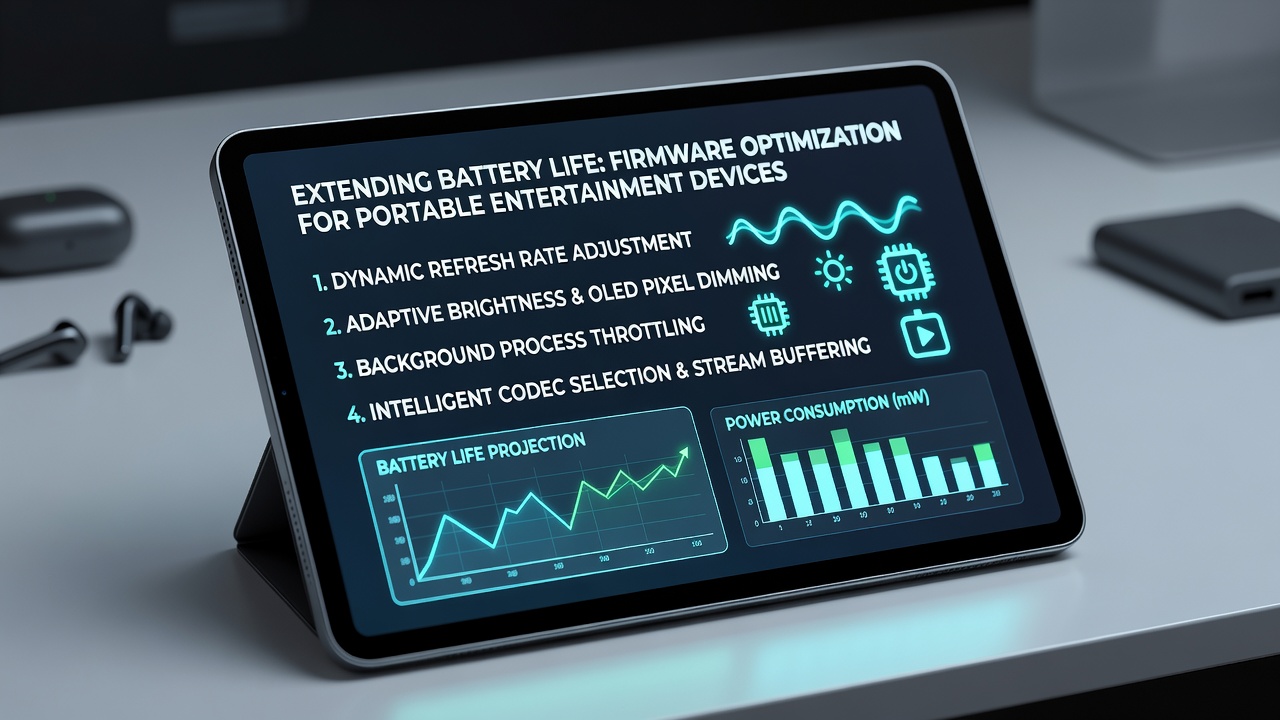
Portable entertainment devices such as tablets, e-readers, and handheld media players rely on firmware updates that adjust power draw during long viewing periods, and developers trace these changes through detailed logging of voltage regulators along with display drivers. Research indicates that firmware-level interventions target multiple subsystems simultaneously because battery drain occurs across processors, screens, wireless radios, and storage components during extended sessions.
Core Firmware Mechanisms for Power Management
Firmware engineers implement dynamic voltage and frequency scaling that reduces clock speeds on system-on-chip units when content decoding stabilizes at lower resolutions or frame rates. Data from device teardowns shows these adjustments occur in sub-millisecond intervals, and they prevent unnecessary power spikes while users watch streaming content or local video files. Observers note that such scaling pairs with adaptive backlight modulation, where firmware monitors ambient light sensors and content brightness histograms to dim LEDs without altering perceived image quality.
Another established technique involves selective suspension of peripheral controllers. During playback the firmware disables unused Bluetooth or Wi-Fi scanning routines after an initial connection handshake completes, and this approach extends runtime by several hours according to internal manufacturer benchmarks. Those who study portable hardware logs often find that storage access patterns also receive optimization, with firmware prefetching video segments into cache memory so the NAND flash enters low-power states more frequently between reads.
Display Pipeline and Codec Efficiency Updates
Firmware revisions frequently refine video decoder pipelines to favor hardware-accelerated codecs over software fallbacks, since dedicated silicon consumes less energy per decoded frame. In June 2026 several device lines received updates that prioritize AV1 hardware decoding on supported chips, and energy consumption figures reveal measurable reductions when streams switch from software-rendered alternatives. The same updates adjust refresh rate timing dynamically, dropping panels to 24 Hz or 30 Hz when source material matches those rates instead of maintaining 60 Hz output.
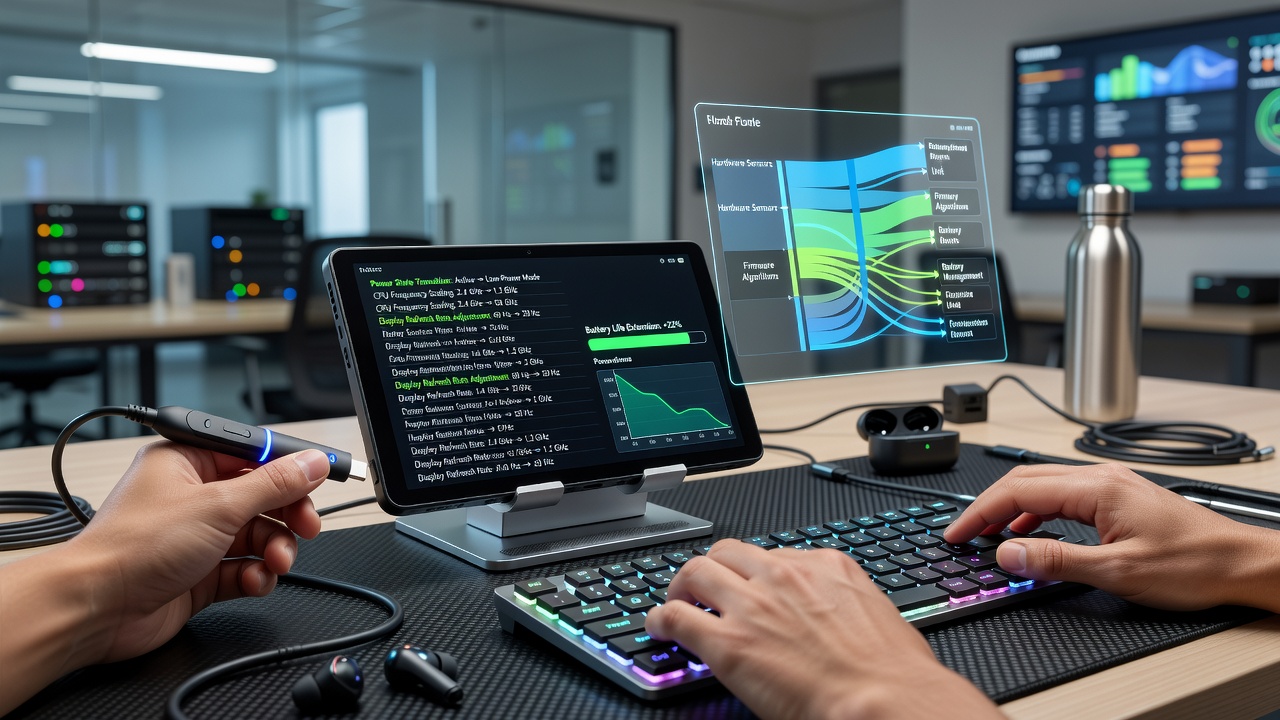
Color management pipelines receive similar treatment, with firmware applying content-adaptive gamma curves that lower overall luminance for darker scenes while preserving detail in highlights. Engineers trace these changes through frame-by-frame power telemetry, confirming that cumulative savings compound across multi-hour viewing windows. Researchers at institutions across multiple regions continue to publish comparative studies on these methods, including work referenced in reports from the U.S. Department of Energy.
Thermal and Sleep State Coordination
Thermal throttling algorithms embedded in firmware interact directly with battery management systems to balance heat generation against discharge rates. When internal temperatures rise during prolonged playback the firmware lowers sustained performance ceilings, which in turn reduces current draw from the cell. People who analyze battery health reports across device fleets observe that coordinated sleep states for the display pipeline and audio DSPs prevent background leakage that would otherwise accumulate over time.
These coordinated states also incorporate predictive elements, where usage pattern history informs preemptive power gating before the device reaches critical thresholds. Firmware versions released after 2024 demonstrate tighter integration between these predictors and operating system media frameworks, allowing smoother transitions without interrupting playback continuity. Figures from industry testing programs show consistent runtime gains when such firmware coordinates multiple subsystems rather than optimizing each in isolation.
Measurement and Validation Approaches
Validation of firmware optimizations requires standardized test loops that simulate extended viewing sessions with varied content genres and network conditions. Engineers capture coulomb counter data alongside application-level metrics to isolate firmware contributions from hardware variances. Studies referenced in documentation from the European Commission energy efficiency program provide cross-device comparisons that help manufacturers benchmark improvements across different portable form factors.
Telemetry dashboards used by support teams aggregate anonymized runtime data to identify regressions after new firmware deployments. This feedback loop enables targeted patches that restore or exceed previous battery performance levels when edge cases surface in real-world usage patterns.
Conclusion
Firmware optimization techniques continue to evolve through iterative tracing of power consumption across device subsystems. The combination of voltage scaling, display pipeline refinements, and coordinated sleep states produces measurable extensions in runtime for users engaged in extended viewing. Ongoing measurement programs and cross-regional research efforts supply the data necessary for sustained progress in this area.