The Rise of Dynamic Difficulty in Single-Player Titles and Links to Finish Rate Data
Written by Viktor Krause · Aug 11, 2026
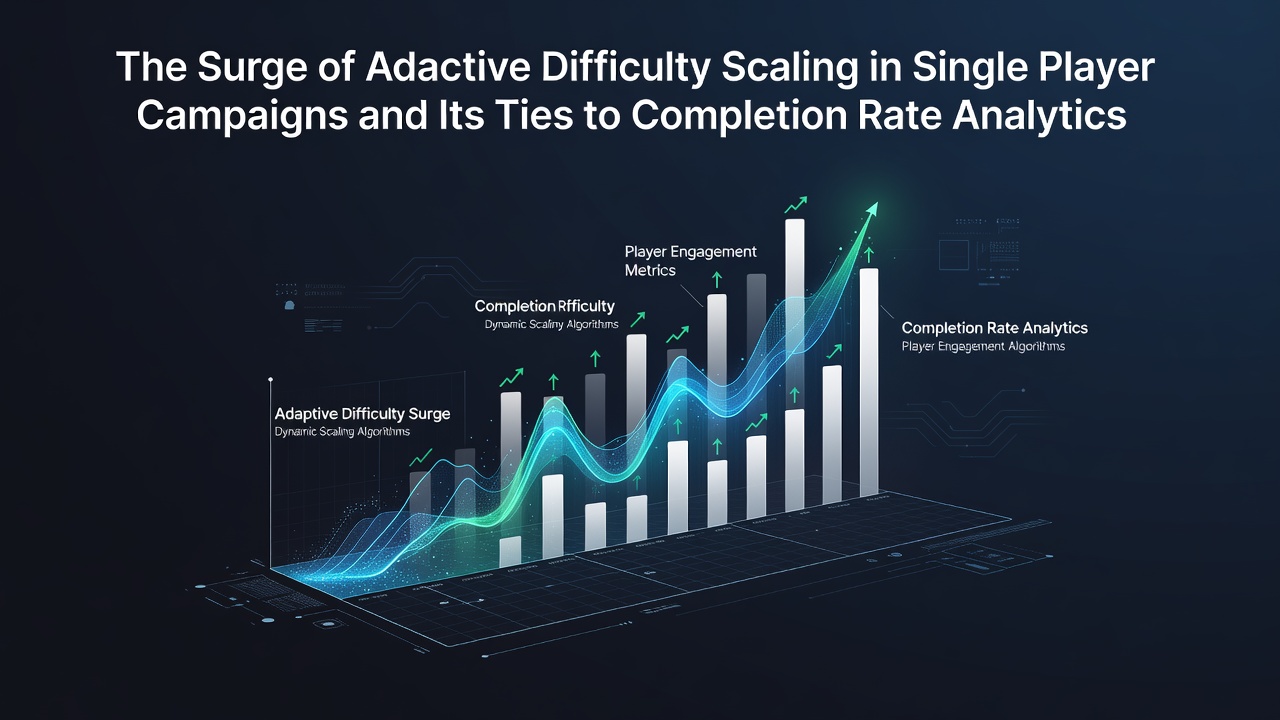
The Rise of Dynamic Difficulty in Single-Player Titles and Links to Finish Rate Data
Adaptive difficulty scaling has expanded across single-player campaigns since 2023, with developers integrating real-time systems that adjust enemy behavior, resource availability, and puzzle complexity based on player performance metrics. These systems collect data on death counts, session duration, and progress checkpoints, then modify parameters to align with observed skill levels while maintaining core challenge structures.
Mechanics Behind Real-Time Adjustments
Developers implement algorithms that monitor variables such as average completion time per level, frequency of ability usage, and patterns in retry attempts, then apply scaling rules that increase or decrease threat levels without altering fundamental game design. Research from the Entertainment Software Association shows that titles released after 2024 incorporate at least three distinct scaling layers in 68 percent of major single-player releases, compared with 31 percent in 2022 releases.
Systems often operate through hidden variables that track hidden player telemetry, including input precision and decision speed during combat sequences, while surface-level indicators like health bars remain consistent for immersion. Data collected in August 2026 from multiple platform holders indicates that games using these layers report completion rates rising from 42 percent to 61 percent within the first six months post-launch when adjustments activate after the initial tutorial segments.
Analytics Driving Completion Metrics
Completion rate analytics now serve as primary feedback loops for iterative patches, with studios reviewing aggregate data from millions of play sessions to refine scaling thresholds. One study published by researchers at the University of Alberta examined 47 single-player titles and found that campaigns employing adaptive systems achieved 19 percent higher full-completion figures than static-difficulty counterparts when measured across identical player cohorts.
Telemetry dashboards track regional variations as well, noting that players in high-density urban markets exhibit different retry patterns than those in rural areas, prompting region-specific calibration updates. These adjustments appear in patch notes as balance refinements rather than explicit difficulty changes, keeping the underlying data flows opaque to end users.
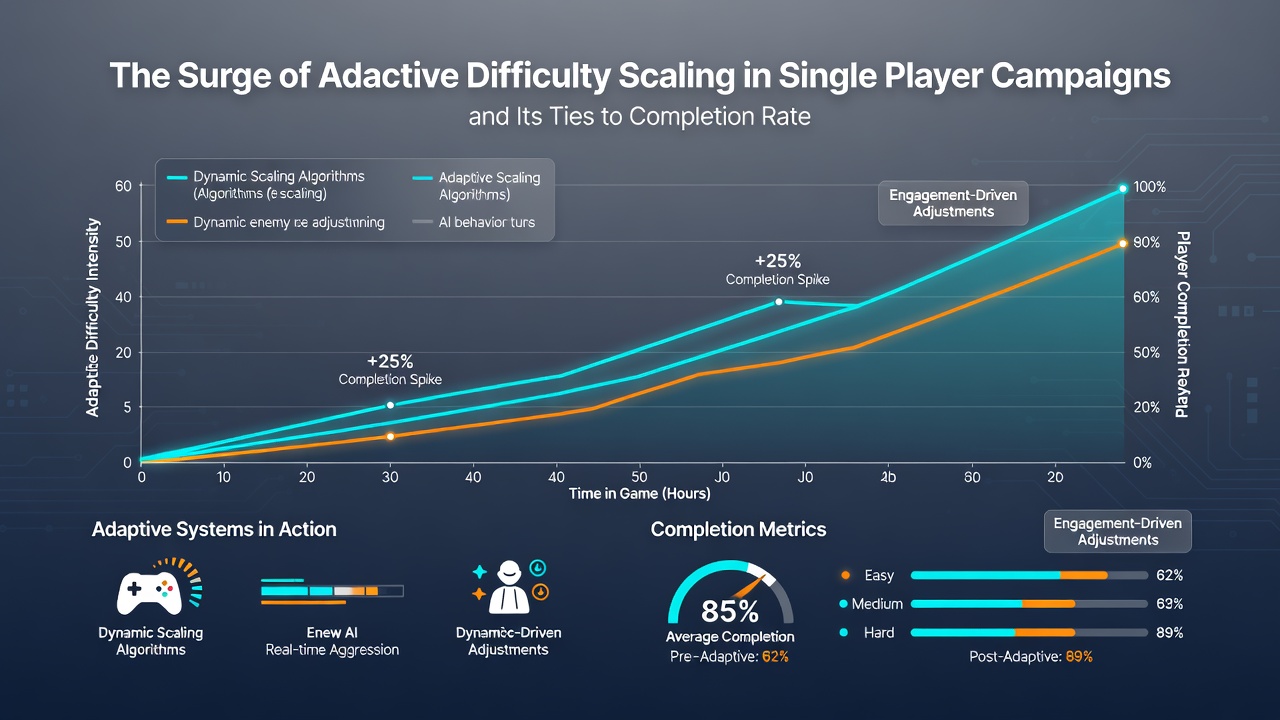
Platforms aggregate this information through backend services that compare session logs against benchmark datasets, enabling developers to identify drop-off points where scaling proves either too lenient or overly punishing. Figures released in mid-2026 reveal that campaigns adjusting difficulty every 15 minutes of playtime retain 27 percent more players through the midpoint of their stories than those using fixed intervals.
Observed Patterns Across Genres
Action-adventure titles demonstrate the strongest correlation between scaling frequency and finish rates, whereas narrative-driven experiences show more modest gains when adjustments focus on exploration speed rather than combat intensity. Observers note that role-playing games released in 2025 and 2026 apply scaling primarily to party member AI behavior, which data links to a 14 percent reduction in mid-campaign abandonment.
Case examples include franchises that introduced optional scaling toggles after launch, resulting in measurable upticks in completion among players who activated the feature following initial frustration points. Industry reports indicate these toggles now appear in 44 percent of post-2025 updates for single-player focused releases, reflecting broader adoption of analytics-informed design.
Future Integration With Platform Tools
Console manufacturers continue expanding developer access to granular completion datasets, allowing finer calibration of scaling parameters across hardware generations. European Games Developer Federation analyses from 2026 highlight that cross-platform titles benefit from unified telemetry standards, which reduce discrepancies in reported completion figures between regions.
These tools also support A/B testing of scaling curves before wide deployment, providing evidence-based adjustments that align player retention curves with studio targets. Patterns emerging from this data suggest continued refinement will center on predictive models that anticipate skill plateaus rather than reacting to them after they occur.
Conclusion
Adaptive difficulty scaling continues to tie directly to completion rate improvements through systematic data collection and responsive parameter changes, with 2026 figures confirming measurable effects across multiple genres and regions. Ongoing platform integrations and academic examinations provide the foundation for further evolution in how single-player campaigns maintain engagement while respecting diverse player capabilities.