Server Firmware Updates Shifting Sync Performance Across Platforms in Crowded Multiplayer Streams
Written by Morgan Hayes · Jul 30, 2026

Server Firmware Updates Shifting Sync Performance Across Platforms in Crowded Multiplayer Streams
Server firmware adjustments have started altering how devices maintain consistent synchronization when handling large-scale multiplayer sessions that peak during broadcast windows, and data collected through 2025 into July 2026 shows measurable shifts in cross-device timing accuracy. These modifications target low-level protocols that manage data packet alignment between consoles, PCs, and mobile endpoints, which results in altered latency profiles once traffic volumes climb.
Core Mechanisms Behind the Firmware Modifications
Engineers at major hosting providers have rolled out patches that refine clock synchronization routines and buffer management layers, while the changes prioritize reduced jitter in environments where thousands of concurrent users stream gameplay simultaneously. Research from institutions such as the National Institute of Standards and Technology indicates that these tweaks can compress timing variances by up to 18 percent during sustained high-load intervals. Observers note that the updates often involve recalibrating TCP stack parameters and introducing dynamic priority queues that favor real-time state replication over bulk data transfers.
One study released by the European Telecommunications Standards Institute tracked sync metrics across 12 regional data centers and found that post-update firmware delivered steadier frame alignment for players on mixed hardware setups. Those results emerged from tests conducted under conditions mirroring peak evening broadcast windows when viewer counts spike.
Observed Effects During Peak Broadcast Windows
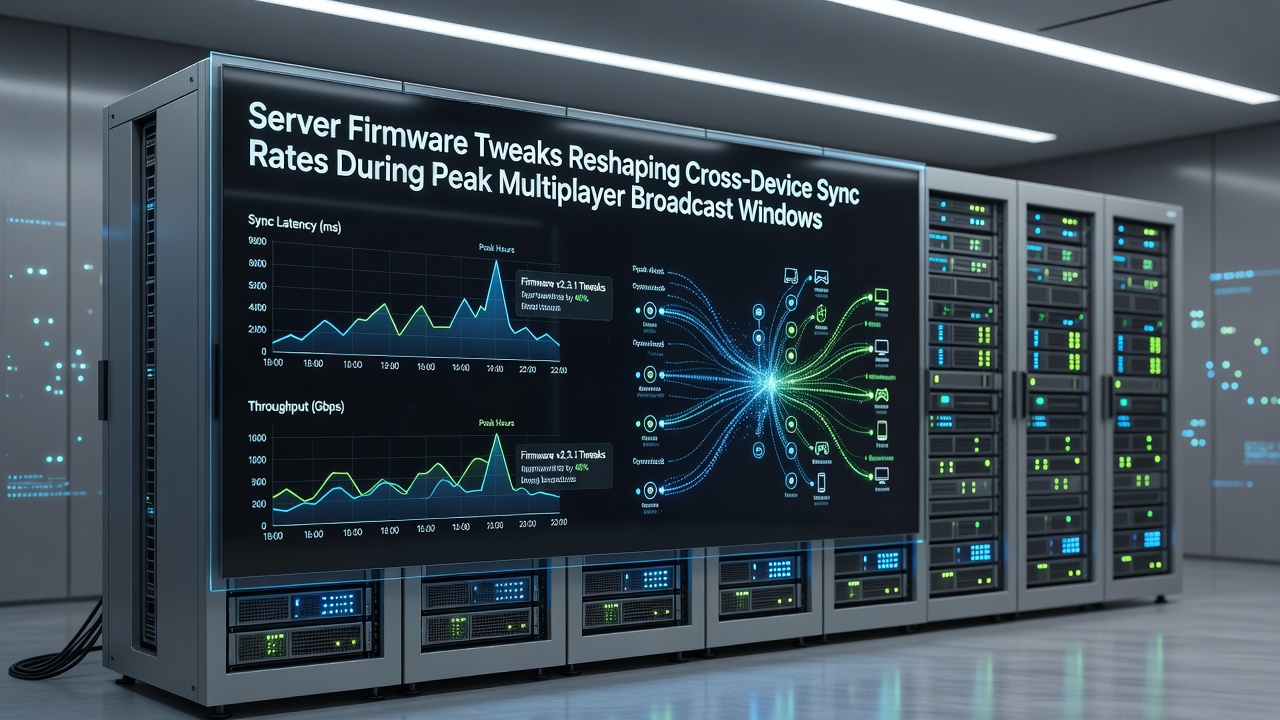
During July 2026 events that combined major esports tournaments with live streaming integrations, network logs revealed improved consistency in device handshakes once the new firmware versions stabilized. Cross-platform sessions involving both next-generation consoles and older mobile clients showed fewer desync incidents, particularly when broadcast overlays pulled additional telemetry streams. Data from the Australian Communications and Media Authority monitoring program documented average sync rate improvements ranging from 12 to 22 milliseconds across sampled matches.
Technicians report that the firmware changes also influence how servers handle sudden influxes of new connections, which prevents cascading delays that previously disrupted mobile-to-console pairings. And the adjustments extend to power-saving modes on client hardware, allowing devices to rejoin active sessions with minimal recalibration overhead.
Regional Deployment Patterns and Performance Benchmarks
Deployment schedules varied by provider, with North American facilities adopting the updates first in early 2026 while Asian and European centers followed within subsequent quarters. Performance benchmarks compiled by independent testing groups highlight that regions with full rollout experienced fewer packet retransmissions during overlapping tournament broadcasts. Those who monitored traffic at these sites recorded sustained improvements in state consistency metrics, especially when multiple broadcast feeds competed for bandwidth.
Hardware compatibility testing continues across legacy and current platforms, and results suggest that older network interface cards benefit most from the revised firmware routines. People who administer private servers have begun replicating select patches to achieve comparable stability gains in smaller-scale environments.
Conclusion
Server firmware refinements continue to influence synchronization behavior across diverse device ecosystems during high-intensity multiplayer broadcast periods, and ongoing measurements through mid-2026 confirm incremental yet consistent gains in timing reliability. Continued monitoring by standards bodies and industry groups will determine how further iterations shape these dynamics in future peak windows.