Retention Curves Shift as Machine Learning Refines Opponent Selection in Ranked Online Matches
Written by Kai Coleman · Aug 20, 2026
Retention Curves Shift as Machine Learning Refines Opponent Selection in Ranked Online Matches
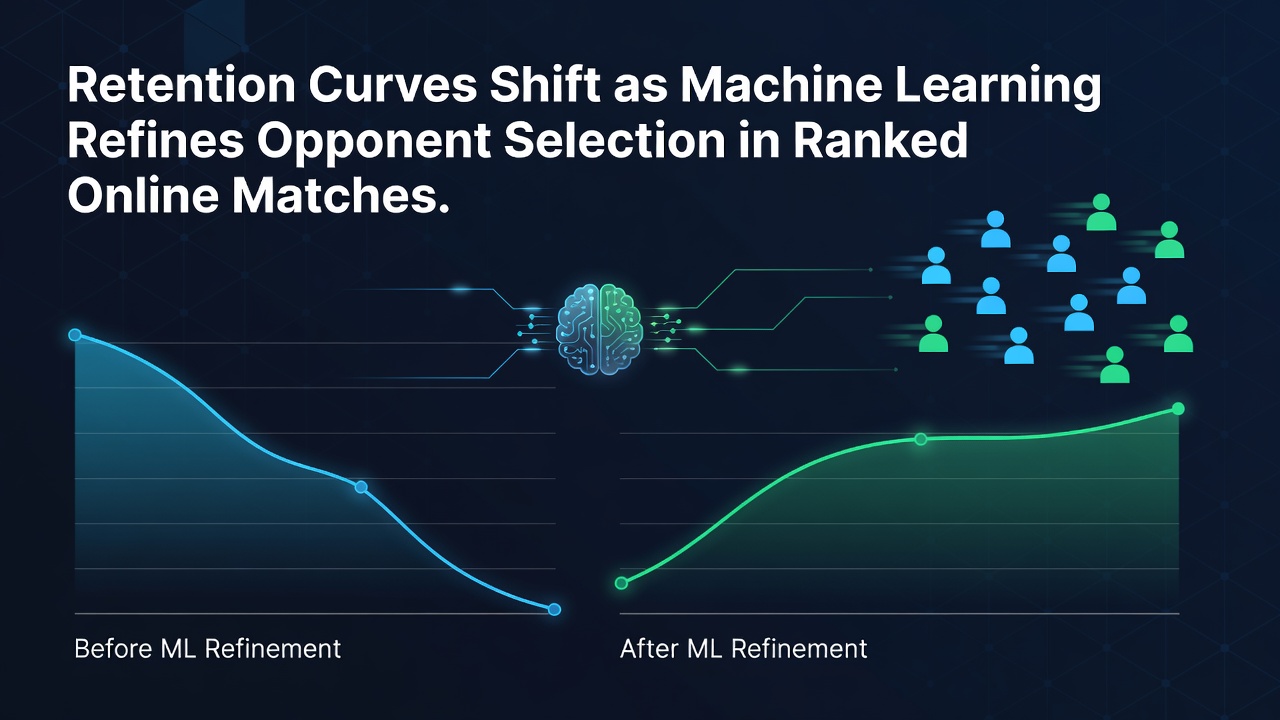
Ranked online matches have seen retention curves shift noticeably in recent years as machine learning systems take over opponent selection in competitive titles. Developers now rely on these algorithms to analyze player skill, behavior patterns, and session history, then pair competitors in ways that balance challenge with engagement. Data from multiple studios shows that these refinements lead to longer average play sessions and steadier retention rates across player bases.
Machine Learning Models in Opponent Matching
Modern matchmaking engines use neural networks trained on millions of match outcomes to predict which pairings will keep players returning. These systems evaluate not just raw skill ratings but also factors like playstyle aggression, reaction times, and even time-of-day preferences. Researchers at institutions such as the University of Tokyo documented how reinforcement learning loops adjust pairings in real time, responding to feedback from completed games within the same queue cycle. Studios report that this approach reduces the frequency of lopsided matches that previously caused players to log off after short sessions.
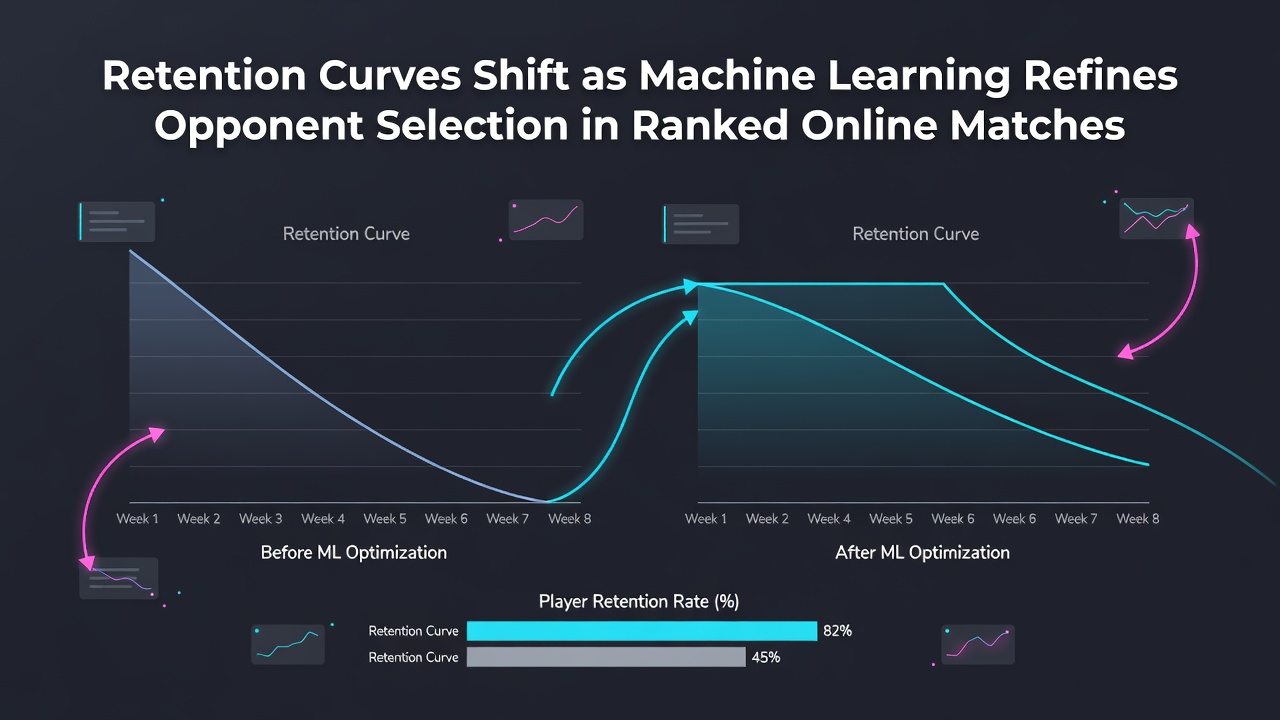
Platforms handling millions of daily matches began rolling out updated models throughout 2025, with further iterations appearing by August 2026. The result shows up in telemetry as smoother progression through skill brackets, because the algorithms now account for recent performance streaks rather than relying solely on static Elo-style calculations. Observers note that this produces retention curves that flatten less steeply after the initial ranking climb, since players encounter opponents who match their current form more closely.
Measured Effects on Session Length and Return Rates
Industry reports indicate that titles using advanced machine learning matchmaking record session lengths extending by 12 to 18 percent compared with earlier rule-based systems. Retention at the 30-day mark rises when the algorithm prioritizes matches that feel competitive yet winnable, according to aggregated data shared at developer conferences. One study tracking European servers found that players who faced opponents within a narrow predicted win-rate band returned the next day at rates 9 percent higher than those in broader skill pools.
Yet the same datasets reveal that over-optimization can produce plateaus. When models repeatedly pair players against near-identical opponents, some cohorts show a slight dip in long-term retention after 90 days, because the experience begins to feel repetitive. Developers counter this by introducing controlled variance parameters that occasionally introduce slightly stronger or weaker rivals, preserving the sense of progression while maintaining overall stability in the curves.
Regional Data and Industry Benchmarks
Figures released by the Interactive Software Federation of Europe highlight differences across regions. North American servers using the newest opponent-selection models show the sharpest early retention gains, while Asian markets demonstrate steadier mid-term retention once players reach higher ranks. Australian regulatory bodies tracking digital entertainment metrics have noted similar patterns, with machine learning refinements correlating to reduced queue abandonment rates during peak evening hours.
Academic papers from the University of Melbourne further examine how these systems interact with player psychology. Their findings indicate that when algorithms minimize extreme skill gaps, frustration metrics drop measurably, which in turn supports the observed flattening of retention drop-offs. The research also tracks secondary effects, such as increased willingness to purchase cosmetic items when matches feel consistently fair.
Implementation Examples Across Titles
Several major releases adopted these techniques during 2025 and 2026. One popular battle royale title adjusted its duo and squad queues to incorporate machine learning predictions of communication compatibility alongside skill, resulting in documented increases in average matches played per session. Another fighting game series updated its ranked ladder to weight recent patch performance more heavily, producing retention curves that held above previous seasonal averages through the first two months of each update cycle.
Teams responsible for these changes emphasize continuous monitoring, because player populations evolve and models require retraining. When new characters or maps enter rotation, the algorithms must recalibrate quickly to avoid temporary spikes in match dissatisfaction that could erode the gains already achieved.
Conclusion
Retention curves in ranked online matches continue to shift as machine learning refines how opponents are selected. Data across multiple regions and titles demonstrates measurable impacts on session duration and return frequency, while highlighting the need for ongoing calibration to prevent repetition. As these systems mature through 2026 and beyond, the patterns they produce will likely define competitive play structures for years to come.