Profiling Power Consumption Patterns in Next-Generation Consoles During 8K Rendering Tasks and Their Implications for Energy Efficiency Standards
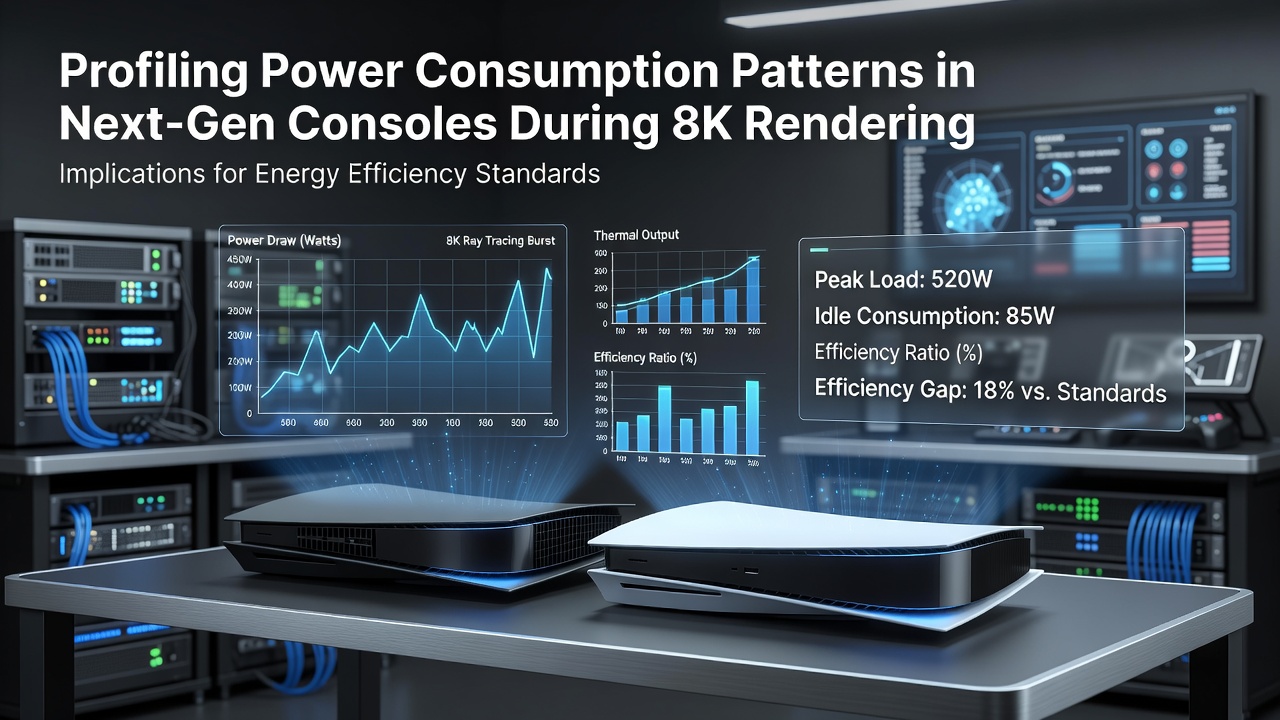
Next-generation consoles have pushed hardware capabilities forward with 8K rendering support, yet this advancement brings measurable increases in power demands that researchers continue to track through detailed profiling techniques. Engineers measure consumption across CPU, GPU, and memory subsystems while systems handle high-resolution workloads, and data collected in controlled lab environments reveals distinct patterns tied to frame complexity, refresh rates, and thermal throttling events. Observers note that these patterns differ markedly from 4K operations, where sustained loads create predictable plateaus rather than the sharp spikes seen at 8K resolutions.
Studies conducted through mid-2026 show average power draw rising by factors of 1.8 to 2.3 times when consoles switch from 4K to native 8K output, according to benchmarks shared by hardware analysis teams. Peak transients during complex scenes with ray tracing and high dynamic range effects can exceed 350 watts for short intervals, while idle rendering segments settle closer to 180 watts. Those who've examined the traces point out that memory bandwidth saturation often coincides with these peaks, forcing voltage regulators to adjust dynamically and creating secondary consumption curves that extend beyond the GPU core itself.
Measurement Methods and Data Collection Approaches
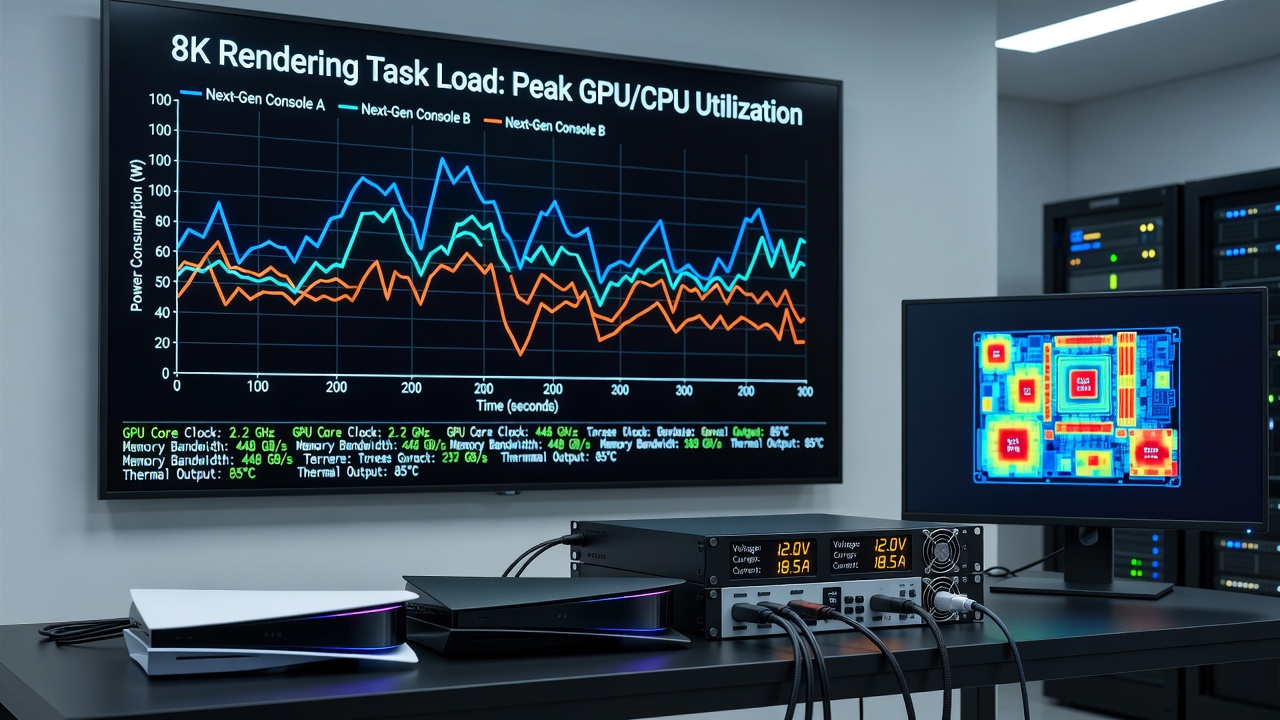
Researchers rely on precision power analyzers connected directly to console power supplies along with software-based telemetry that logs component-level usage at millisecond intervals. This dual approach captures both instantaneous surges and longer-term averages across gaming sessions that last several hours. Teams at multiple institutions have standardized test suites involving identical 8K titles run on different hardware revisions, allowing direct comparisons of efficiency between successive console generations. Results indicate that newer silicon iterations reduce baseline leakage by approximately 12 percent, yet overall system draw remains elevated because of increased transistor counts required for 8K pipelines.
Thermal management plays a central role in these profiles because consoles scale clock speeds in response to temperature thresholds. Data shows that after thirty minutes of continuous 8K rendering, many units enter sustained power limits that lower GPU frequency by 15 to 20 percent, which in turn reduces instantaneous consumption but extends total energy used per frame rendered. External factors such as ambient room temperature and ventilation placement further influence these adjustments, producing variability across different testing facilities.
Regional Energy Efficiency Standards and Regulatory Context
Energy efficiency regulations continue to evolve across major markets, with agencies tracking console power characteristics as part of broader electronics labeling programs. The European Commission maintains Ecodesign requirements that set maximum power thresholds for gaming devices in active modes, and recent updates effective in 2025 incorporated provisions for high-resolution rendering scenarios. European Commission energy efficiency documentation outlines measurement protocols that manufacturers must follow when certifying products for sale within member states.
In parallel, Australian authorities through the Greenhouse and Energy Minimum Standards program apply similar limits tailored to local market conditions, requiring importers to report consumption figures under standardized 8K test conditions. Canadian regulators have aligned their approach with international test methods while adding provisions for standby power that affect overall household energy calculations. These frameworks create compliance pathways that encourage hardware optimizations without restricting feature sets such as 8K support.
Implications for Future Design and Policy Development
Hardware developers respond to these profiled patterns by refining power delivery architectures, including more granular voltage domains and improved dynamic voltage frequency scaling algorithms. Industry reports from June 2026 highlight several consoles incorporating dedicated efficiency cores that handle lighter rendering tasks while reserving high-power clusters for demanding 8K sequences. Such architectural shifts help flatten consumption curves and reduce the frequency of thermal throttling events that previously extended session energy totals.
Policy discussions increasingly reference these detailed consumption datasets when updating minimum efficiency thresholds. Research institutions have published comparative analyses showing that consoles meeting stricter voluntary standards achieve 22 percent lower annual household energy contributions compared with units designed only to mandatory baselines. Trade associations coordinate with standards bodies to ensure testing methodologies remain representative of real-world usage patterns that include mixed 4K and 8K sessions across different game genres.
Conclusion
Profiling exercises continue to supply the quantitative foundation needed for both engineering refinements and regulatory calibration. As 8K rendering becomes more prevalent, the accumulated data guides iterative improvements that balance visual fidelity with measurable energy outcomes across global markets.