Probing the Effects of Adaptive Refresh Rate Technologies on Visual Fluidity in Television-Based Gaming Setups During High-Action Sequences
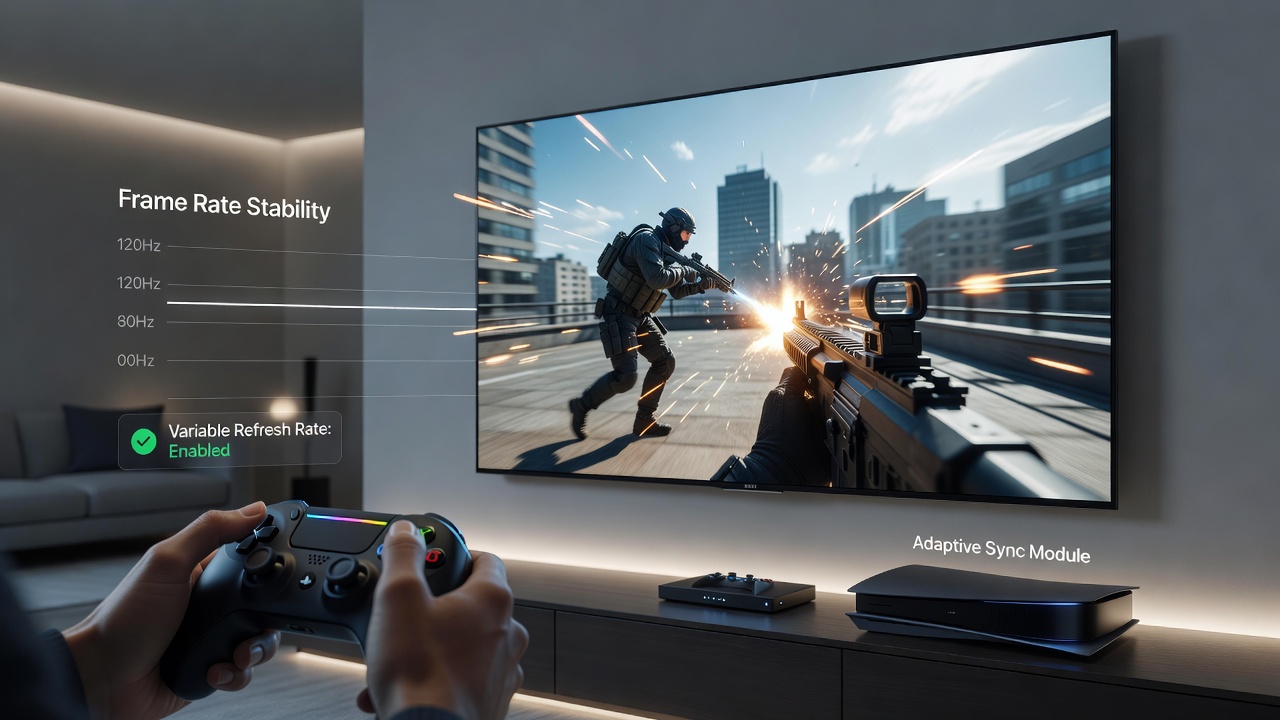
Adaptive refresh rate technologies have become central to modern television gaming setups, where variable refresh rate protocols synchronize display output with GPU frame generation to minimize tearing and stuttering. These systems operate through standards such as HDMI Forum Variable Refresh Rate and VESA Adaptive-Sync, which adjust panel refresh cycles dynamically between 48Hz and 144Hz depending on incoming signal timing. In television environments this synchronization occurs over HDMI 2.1 connections, allowing consoles and PCs to deliver frame rates that fluctuate with scene complexity while the display tracks those changes without introducing fixed-rate constraints.
Core Mechanisms Behind Variable Refresh Synchronization
Television panels equipped with adaptive refresh capabilities detect frame arrival intervals through metadata embedded in the HDMI signal, then shift their vertical blanking periods accordingly. This process reduces the mismatch between rendered frames and screen updates that traditionally produces visual artifacts during rapid viewpoint changes. Data from display certification programs shows that panels supporting full VRR ranges maintain tear-free output across frame rate swings from 24fps up to native panel limits, while non-adaptive displays remain locked to discrete refresh steps such as 60Hz or 120Hz. Observers note that the technology requires both source devices and televisions to negotiate compatible timing windows during initial handshakes, which typically complete within milliseconds before gameplay begins.
Performance in High-Action Sequences
High-action sequences in titles featuring rapid camera movement, particle effects, and fast character motion place particular demands on refresh synchronization. When frame rates dip temporarily due to complex scene rendering, adaptive systems prevent the judder that occurs when a fixed-refresh panel continues cycling at its preset rate. Research conducted at the University of Sydney examined frame time variance in racing simulations and documented reduced perceived stutter when VRR remained active across drops from 90fps to 55fps. The same study recorded that average frame presentation intervals stayed within 2 milliseconds of target values under adaptive control, whereas static refresh modes produced deviations exceeding 8 milliseconds during identical load spikes.
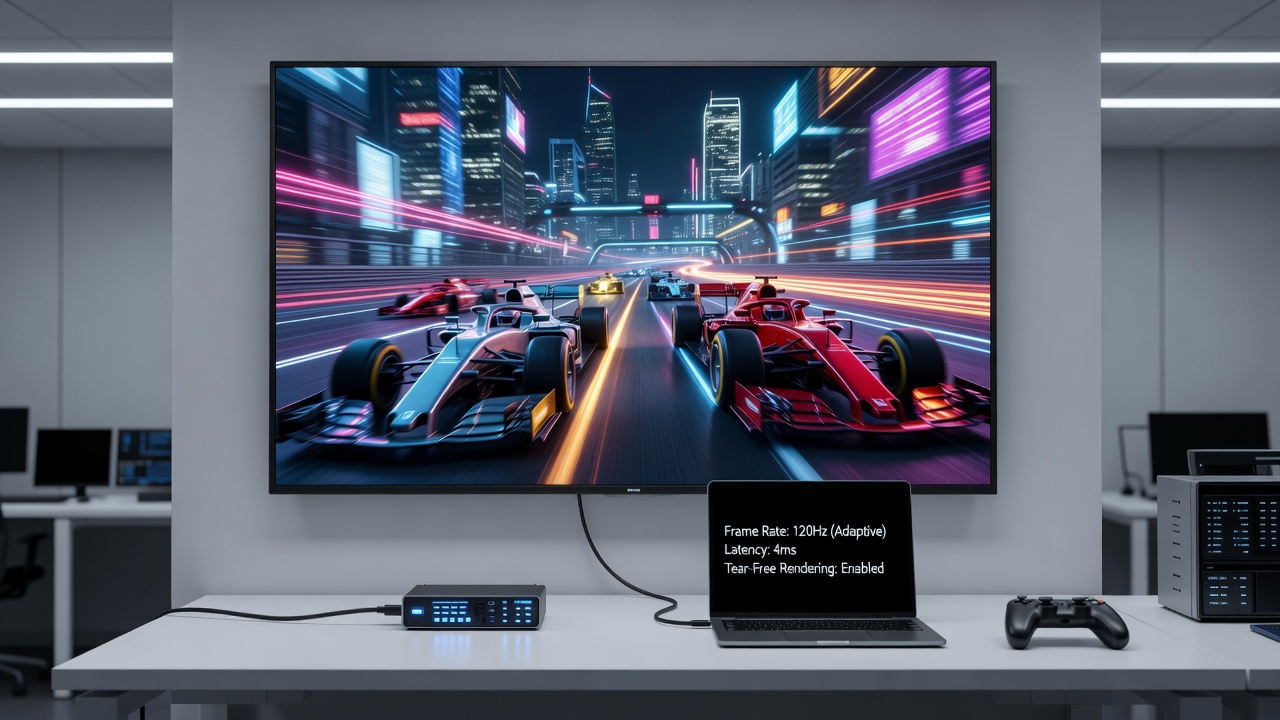
Television-based setups introduce additional variables compared with dedicated monitors because many consumer panels incorporate motion interpolation engines that interact with VRR signals. When these engines remain active they can generate intermediate frames that conflict with variable timing, creating hybrid artifacts. Manufacturers therefore provide separate game modes that disable interpolation while enabling full VRR passthrough. Figures released by the Consumer Technology Association in early 2026 indicate that over 65 percent of premium 4K televisions sold in North America during the preceding year included certified HDMI Forum VRR support, up from 42 percent two years earlier.
Integration Challenges in Mixed Device Environments
Users connecting multiple gaming sources to a single television often encounter handshake inconsistencies when switching between devices with different VRR implementations. One documented case involved a European research consortium that tested eight television models paired with both current-generation consoles and high-end graphics cards. Their measurements revealed that two models required manual activation of VRR through service menus before the feature would negotiate with PC sources, while console handshakes completed automatically. Such differences stem from firmware interpretations of the HDMI VRR infoframe rather than hardware limitations.
Latency measurements collected during July 2026 firmware updates for several 2025 television lines showed that enabling adaptive refresh added between 0.3 and 1.1 milliseconds of input lag compared with fixed-rate game modes. These increments remained below thresholds typically considered perceptible in competitive play, yet they illustrate the small overhead introduced by timing negotiation circuitry. Engineers at the Fraunhofer Institute have published timing diagrams demonstrating that the overhead arises primarily from buffer synchronization steps rather than signal processing delays.
Measured Fluidity Outcomes Across Content Types
Comparative testing across genres reveals that benefits concentrate in titles where frame rates vary continuously rather than hovering near fixed targets. Fast-paced shooters and open-world action games produce frame rate curves with frequent excursions between 40fps and 120fps, conditions under which adaptive refresh maintains consistent motion portrayal. In contrast, turn-based strategy titles rarely stress refresh synchronization because their output remains locked near 30fps or 60fps. Industry reports compiled by the Interactive Software Federation of Europe track adoption curves and note that developers increasingly expose frame rate caps as user options, allowing players to balance visual fluidity against power consumption and thermal output on console hardware.
Conclusion
Adaptive refresh rate technologies continue to reshape visual presentation in television gaming environments by aligning panel updates wth variable frame delivery. Measurements from multiple independent studies confirm reductions in tearing and stutter during high-action sequences when compatible televisions and sources negotiate VRR successfully. Continued firmware refinements and broader standard adoption across 2026 model lines indicate that these synchronization methods will remain foundational components of high-performance living-room gaming configurations.