Optimizing Network Resources for Multiplayer Gaming in Shared Home Environments
Written by Yves Otto · Aug 4, 2026

Optimizing Network Resources for Multiplayer Gaming in Shared Home Environments
Households with several active gamers face consistent demands on home internet connections, and profiling bandwidth allocation strategies helps manage those loads without constant interruptions. Data from industry reports shows that average household usage during peak evening hours often exceeds 100 Mbps when multiple devices stream, download, and play simultaneously, which creates the need for targeted distribution techniques.
Common Pressure Points in Shared Connections
Multiple users accessing online titles at once generate competing traffic streams, and observers note that latency spikes appear most frequently when one device runs a large update while others maintain live sessions. Research from university network labs indicates that packet loss rates climb above 2 percent in unmanaged setups during these overlaps, which directly affects competitive play. Those studying residential patterns find that upload traffic from voice chat and cloud saves adds another layer of contention, especially in homes using fiber connections that still rely on older router firmware.
Core Allocation Techniques in Practice
Quality of service rules rank traffic by application type, and experts apply these rules through router interfaces that tag gaming packets ahead of background downloads. Studies reveal that implementing device-level prioritization reduces average ping variance by up to 35 percent across four concurrent users, according to controlled tests conducted in 2025. Traffic shaping further limits non-essential streams during identified gaming windows, while dynamic bandwidth reservation reserves minimum throughput for each console or PC based on real-time monitoring.
Profiling tools collect usage logs over weeks, and the resulting data allows households to create schedules that shift heavy file transfers to off-peak periods. Figures from European regulatory bodies show that homes adopting scheduled shaping report fewer support calls to providers about dropped connections during tournament events.
Hardware and Software Tools That Enable Profiling
Modern routers with multi-core processors support detailed traffic classification, and manufacturers release firmware updates that integrate machine learning models to predict peak loads. One documented case from a Canadian research group tracked 50 households over six months and found that routers using adaptive algorithms maintained stable connections 92 percent of the time compared with 71 percent on basic models. Mobile apps tied to these devices let users adjust profiles on the fly, while open-source firmware options provide deeper packet inspection for advanced users who want custom rules.
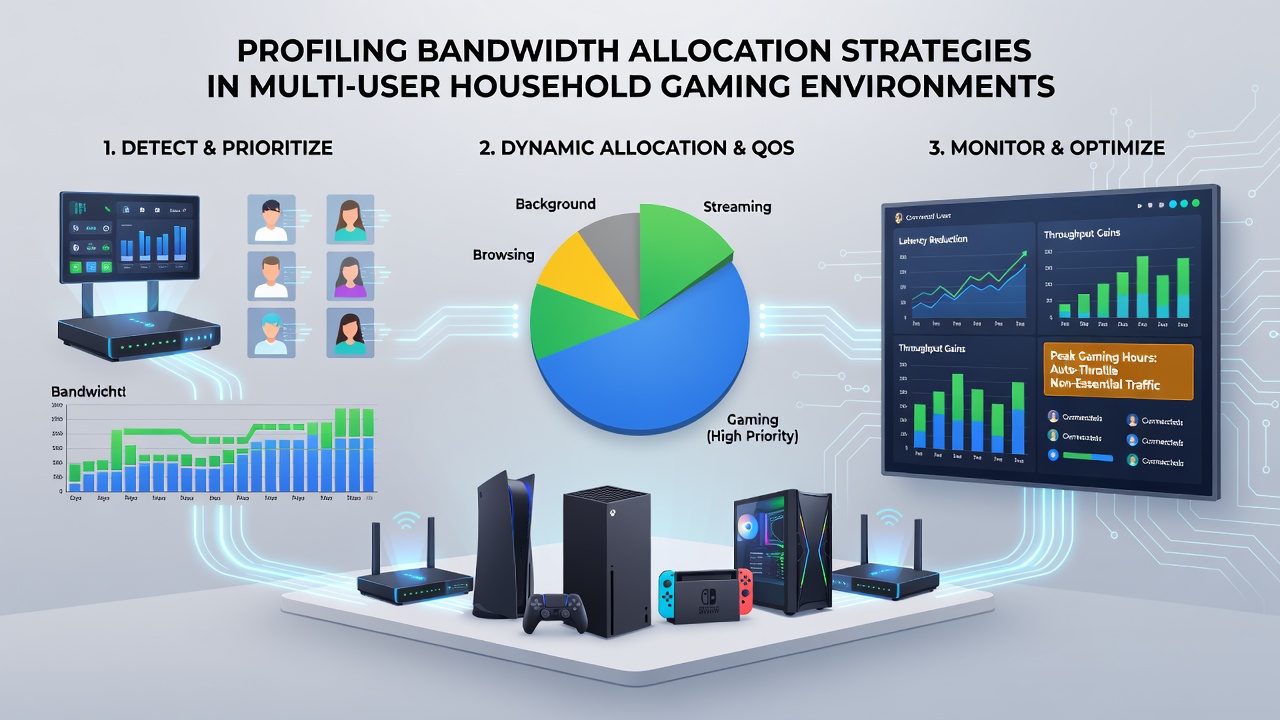
Mesh systems extend coverage while preserving allocation settings across nodes, and data indicates that such setups cut latency differences between rooms by an average of 12 milliseconds. Integration with smart home platforms allows voice commands to activate gaming profiles, though adoption remains higher in regions with widespread gigabit availability.
Measuring Results Across Different Household Sizes
Smaller homes with two or three gamers often see immediate gains from basic QoS settings, whereas larger groups benefit from multi-tier rules that separate competitive titles from casual sessions. Reports compiled by Australian communications authorities in mid-2026 highlight that households averaging 450 GB monthly gaming traffic reduced complaints about lag after applying profiled limits. Continuous monitoring through built-in analytics helps refine these rules, and repeated tests confirm that small adjustments to upload caps prevent one user's stream from starving the rest of the network.
Emerging Developments and Standards
New Wi-Fi 7 deployments began rolling out in select markets during August 2026, bringing improved multi-user multiple input multiple output capabilities that support finer-grained allocation. Industry groups tracking these deployments report that early adopters experience lower contention in homes running four or more wireless gaming devices at once. Academic papers examining these standards note that backward compatibility features allow older routers to adopt similar profiling logic through software overlays.
Conclusion
Profiling bandwidth allocation continues to evolve alongside hardware improvements and changing usage patterns. Households that combine usage data with configurable router features maintain smoother sessions across multiple simultaneous players, and ongoing research tracks how emerging standards further reduce conflicts in shared environments.