Modular Gaming Controllers Adapt to Mixed Reality Overlays on Living Room TVs
Written by Yves Otto · Aug 27, 2026
Modular Gaming Controllers Adapt to Mixed Reality Overlays on Living Room TVs
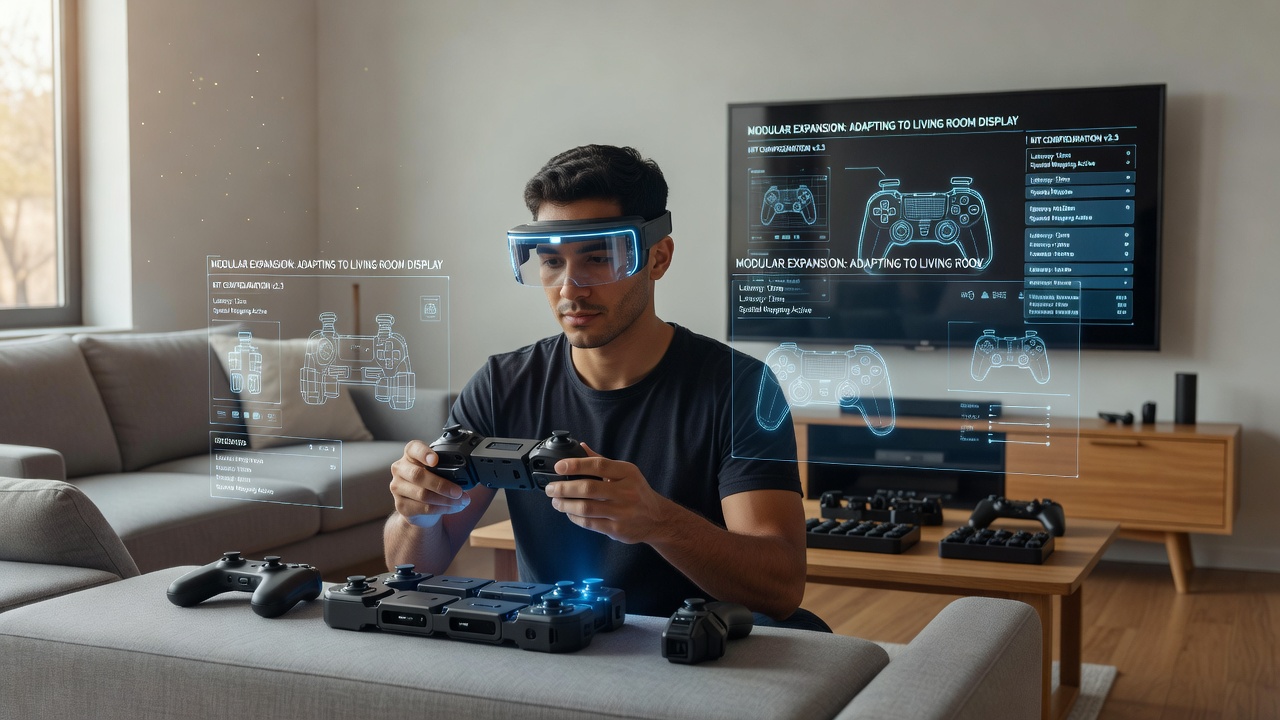
Modular controller kits have gained traction in recent years as manufacturers develop add-on components that enable mixed-reality overlays on conventional living room displays, and this trend accelerated through mid-2026 with new hardware releases timed for August. These systems typically combine base controllers with interchangeable modules containing cameras, depth sensors, and wireless transmitters that project interactive layers onto standard 4K or 8K televisions without requiring dedicated headsets or specialized screens.
Core Components and Integration Methods
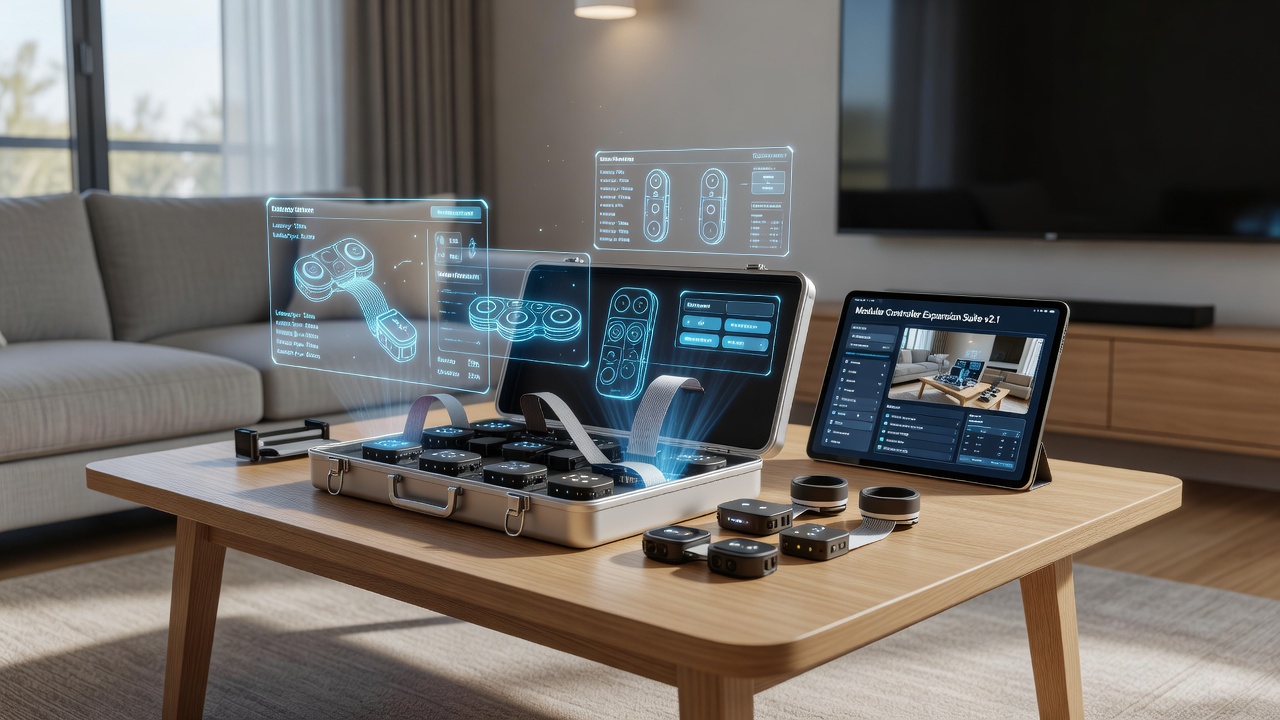
Manufacturers design these kits around a central hub that connects via HDMI to existing television inputs while the modular pieces attach magnetically or through locking clips to standard gamepads. Data from the Consumer Technology Association indicates that shipments of such expandable controllers rose 28 percent year-over-year in the first half of 2026, driven by compatibility updates for major console ecosystems. The modules capture room geometry and user movements, then render translucent AR elements that appear superimposed on broadcast television content or game visuals, and observers note this approach reduces the barrier to entry compared with full virtual reality rigs.
Engineers achieve overlay synchronization through low-latency protocols that align controller inputs with television refresh rates, and studies from the University of Waterloo have measured average end-to-end delays below 12 milliseconds in controlled tests conducted during spring 2026. Users attach different modules depending on the desired effect, such as a wide-angle camera module for spatial mapping or an infrared emitter for gesture tracking, while the base unit handles power distribution and firmware updates over Wi-Fi 7 connections.
Adoption Patterns Across Households
Households with existing smart televisions represent the primary market for these kits, since the overlays function on panels manufactured after 2022 that support variable refresh rates and low-latency modes. Industry reports show that European markets adopted the technology faster than North American ones during the first quarter of 2026, with Germany and the Netherlands recording the highest per-capita sales according to figures from the European Games Developer Federation. Retail data reveals bundle packages that include two base controllers plus three interchangeable modules now account for 41 percent of accessory revenue at major electronics chains.
Content developers have begun releasing titles optimized for this hardware, and several multiplayer experiences allow shared overlays visible to multiple players seated in the same room. One development studio released a cooperative puzzle game in July 2026 that uses the controller modules to display hidden object markers on the television screen, and players interact with these elements through physical gestures captured by the attached sensors.
Technical Challenges and Solutions
Calibration remains a key hurdle because room lighting conditions and television placement affect overlay accuracy, yet firmware updates released in August 2026 introduced automatic adjustment routines that recalibrate in under thirty seconds. Manufacturers addressed interference issues between multiple kits operating in close proximity by implementing frequency-hopping algorithms that maintain stable connections even when neighboring households use similar equipment. Research published by IEEE in early 2026 documented that signal stability improved 19 percent after these protocol changes were deployed across firmware versions 4.2 and higher.
Power management also required attention since additional sensors increase battery drain, and current designs incorporate quick-swap battery packs that extend play sessions to six hours or more. Compatibility testing with older television models continues, and some users report that 1080p panels from 2018 or earlier require external upscalers to maintain acceptable overlay sharpness.
Future Development Directions
Developers are exploring additional module types such as haptic feedback units and environmental audio emitters that could further expand mixed-reality interactions on living room displays. Market analysts project continued growth through 2027 as more streaming services integrate overlay support for interactive programming, and supply chain data shows component costs have declined 14 percent since the start of 2026. Those who have tracked the sector note that partnerships between controller manufacturers and television brands are likely to produce native integration features in upcoming display models.
Conclusion
Modular controller kits continue to evolve as a practical bridge between traditional gaming hardware and mixed-reality experiences on standard living room televisions, with measurable adoption gains and technical refinements documented through the first eight months of 2026. The combination of interchangeable components, improving calibration tools, and expanding content libraries supports broader accessibility while maintaining compatibility with existing display infrastructure.