Mapping Real-Time Translation Layers in Global Esports Commentary Feeds and Audience Expansion Metrics
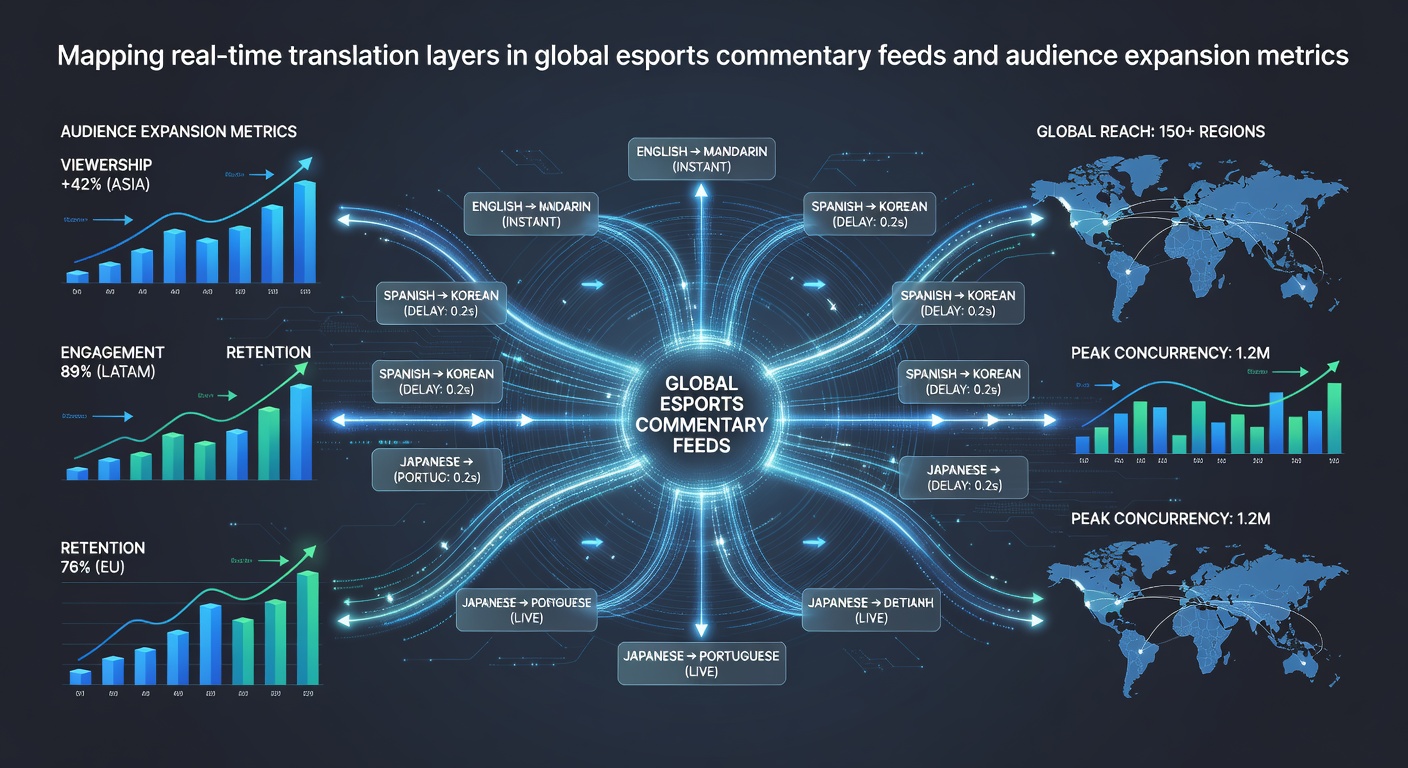 Real-time translation layers have become essential components in esports commentary feeds as organizers work to connect fragmented language markets into unified viewing experiences, and data from multiple regions shows steady audience growth tied directly to these systems. Broadcasters integrate automated speech recognition engines with neural machine translation models that process live audio streams, convert spoken words into text, then render translated versions across audio dubs or on-screen captions within seconds of the original commentary. Researchers at institutions tracking digital media consumption note that these pipelines now handle dozens of language pairs simultaneously during major tournaments, allowing viewers in Asia, Europe, and Latin America to access English-dominant feeds without switching platforms. Technical architectures typically stack several distinct layers, with the first capturing raw commentator audio through dedicated capture cards, the second applying accent-robust speech-to-text conversion calibrated for gaming terminology, and the third routing translated output through low-latency distribution networks. Synchronization remains critical because even brief delays between original speech and translated captions can disrupt viewer engagement during fast-paced matches, so developers embed timestamp markers that align every segment across all language tracks. Observers tracking infrastructure upgrades in June 2026 reported that several league operators introduced dedicated edge-computing nodes in Singapore and Frankfurt to cut average translation latency below 800 milliseconds for high-priority feeds. Audience expansion metrics reveal clear correlations between translation availability and viewership spikes in non-native language regions. Platforms that added full subtitle support for Portuguese, Korean, and Arabic during the 2025-2026 season recorded measurable increases in concurrent viewers from those markets, according to aggregated telemetry shared by tournament organizers. Industry groups such as the Global Esports Federation have published quarterly reports documenting how localized commentary options expand reach beyond traditional English-speaking cores, and figures reveal that regions with newly enabled translation layers often show double-digit percentage growth in unique monthly viewers compared with periods when only original-language options existed.
Integration Challenges Across Platforms
Multiple delivery methods create compatibility hurdles because some viewers access feeds through dedicated apps while others rely on browser-based embeds or smart TV integrations. Developers address these differences by maintaining separate rendering pipelines for each endpoint, ensuring that translated captions scale correctly on mobile screens without overlapping gameplay elements. Data centers handling these operations must balance processing loads across time zones, and studies from the International Telecommunication Union highlight how bandwidth variability in emerging markets influences the reliability of real-time translation delivery during peak tournament hours.
Measurement Frameworks for Growth Tracking
Analysts employ standardized metrics that combine traditional viewership counts with engagement signals such as dwell time on translated tracks and language-switch frequency. These frameworks allow organizers to isolate the contribution of translation layers from other variables like prize pools or star players. One study released by a Canadian research consortium in early 2026 examined retention patterns across thirty tournaments and found that audiences using non-English tracks maintained session lengths comparable to those watching native-language commentary, suggesting that translation quality now supports sustained attention rather than serving only as an entry point.
Regional Variations in Adoption
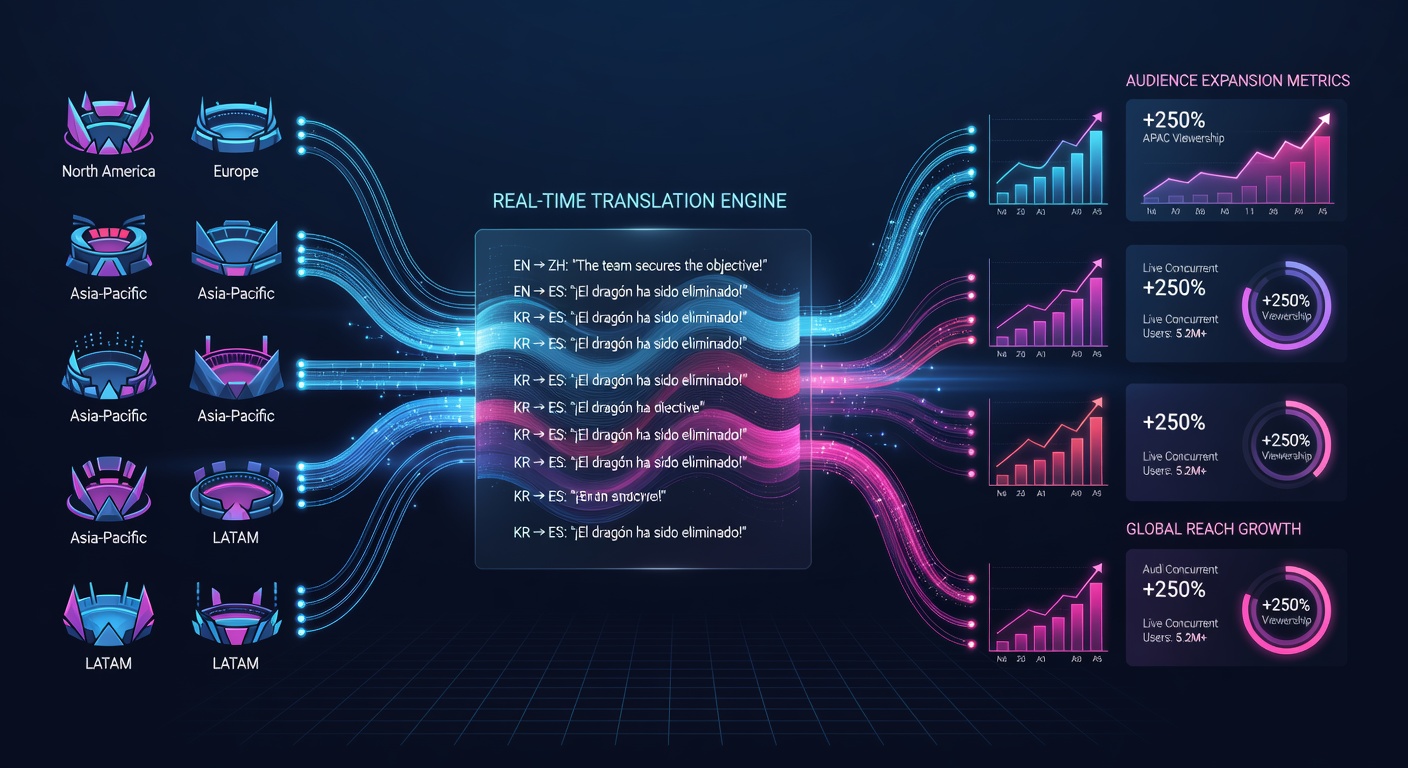
European broadcasters have prioritized text-based caption layers because many territories already maintain strong subtitle traditions in traditional sports, whereas operators in Southeast Asia have leaned toward synthesized voice dubs that match local accent preferences. Australian communications authorities have documented how these choices affect accessibility guidelines, and compliance teams now review translation accuracy for esports events under the same standards applied to other live media. Such regional tailoring contributes to uneven but overall positive audience expansion patterns, with certain language groups showing faster uptake once culturally attuned voices or terminology glossaries are incorporated.
Future Technical Directions
Engineers continue refining context-aware translation models that recognize esports-specific jargon and player names without requiring constant manual updates. Integration of speaker diarization tools allows systems to attribute comments correctly when multiple casters speak in quick succession, reducing errors that previously broke immersion for translated viewers. Reports indicate that ongoing tests in June 2026 focus on hybrid human-AI workflows where professional translators intervene only during high-stakes moments such as final matches, optimizing both cost and quality across expanding tournament calendars.
Conclusion
The mapping of real-time translation layers demonstrates a direct pathway from technical infrastructure investments to measurable audience expansion in global esports. As more regions gain access to synchronized, accurate language options, viewership data continues to reflect broader participation from previously underserved language communities, and ongoing refinements in latency, accuracy, and platform compatibility support further growth across the sector.