Latency Maps Expose Synchronization Challenges in Cloud Gaming and Home Theater Audio Systems
Written by Kai Coleman · Aug 18, 2026
Latency Maps Expose Synchronization Challenges in Cloud Gaming and Home Theater Audio Systems
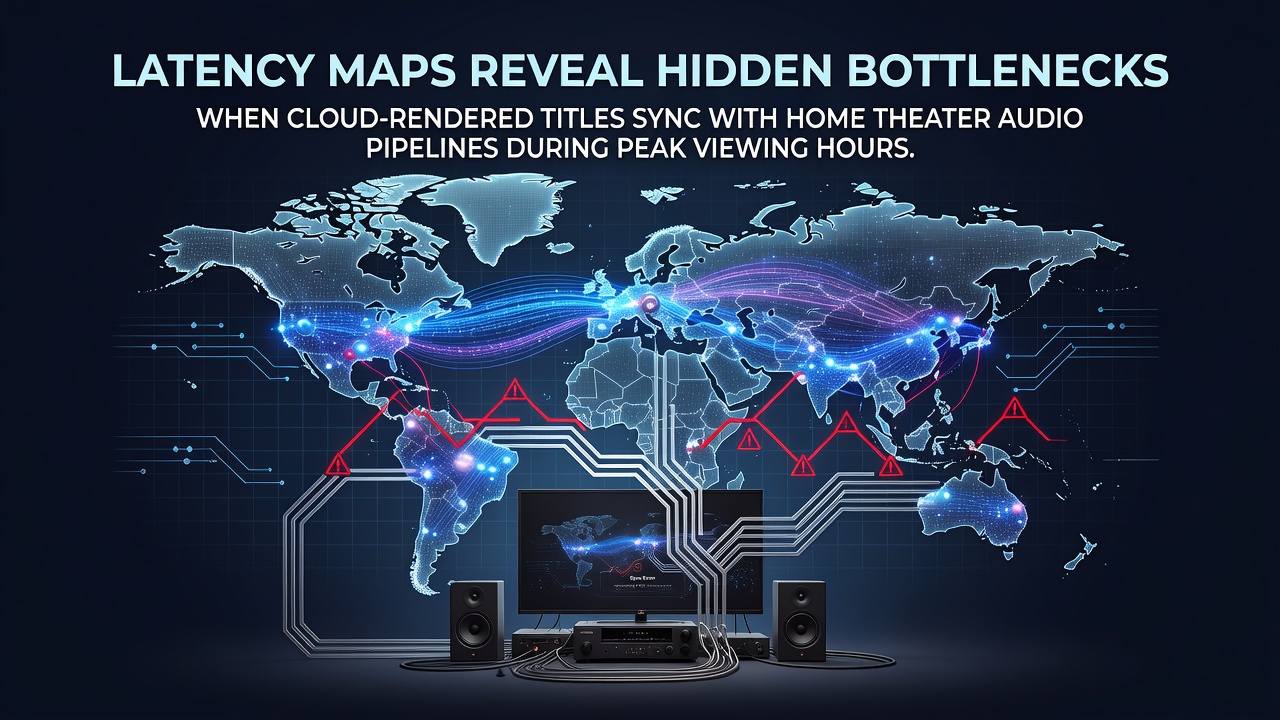
Cloud-rendered titles often encounter synchronization hurdles when their audio streams meet home theater pipelines, and latency maps have become essential tools for identifying these issues during peak viewing hours in August 2026. These maps plot timing discrepancies across networks and devices, revealing where delays accumulate as game data travels from remote servers to local receivers and then to audio processors. Observers note that evening hours see increased traffic that strains both cloud infrastructure and residential AV setups, leading to measurable offsets between video frames and sound output.
Understanding Latency Mapping Techniques
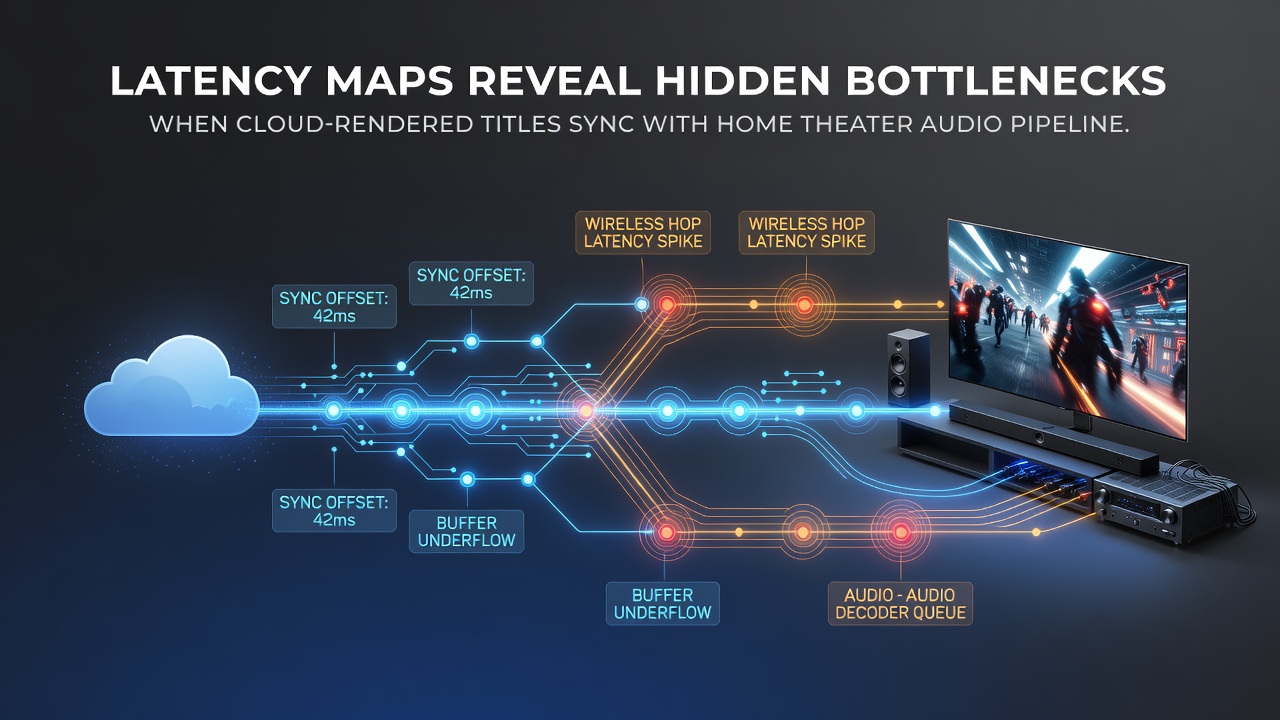
Researchers apply latency mapping by collecting timestamp data from multiple points in the transmission chain, including server output, network transit, decoder buffers, and home theater receivers. This approach creates visual diagrams that highlight clusters of delay rather than isolated incidents. Data from industry reports shows how these clusters form when cloud platforms handle simultaneous requests from thousands of users, particularly in urban areas where bandwidth competition intensifies after 7 PM local time. The resulting maps allow technicians to trace audio pipeline bottlenecks back to specific compression stages or HDMI handshakes that introduce variable latency.
Peak Viewing Hours and Network Strain
August 2026 figures indicate that streaming demand rises sharply between 6 PM and 11 PM across North America and Europe, coinciding with higher rates of cloud gaming sessions paired with surround sound systems. During these windows, packet jitter increases as home networks share resources with other connected devices, and audio pipelines struggle to maintain lip sync when incoming frames arrive in irregular bursts. Studies conducted by academic teams at institutions such as IEEE research publications demonstrate that even small variations in buffer depth can shift audio ahead or behind video by 40 to 80 milliseconds, enough to disrupt immersion in fast-paced titles. Latency maps make these shifts visible by overlaying timing data onto network topology diagrams, showing precisely where the pipeline diverges from real-time expectations.
Audio Pipeline Interactions with Cloud Streams
Home theater receivers process cloud game audio through multiple stages that include decoding, upmixing, and room correction algorithms, each adding its own processing interval. When cloud-rendered titles deliver compressed audio tracks, these stages compound any upstream delays already present from server rendering or wide-area network routing. Experts have observed that certain Dolby Atmos and DTS:X implementations prioritize dynamic range over strict timing alignment, creating scenarios where latency maps flag persistent offsets during high-load periods. Manufacturers have responded by releasing firmware updates that adjust buffer management, yet the maps continue to identify residual issues tied to specific receiver models and firmware versions released before mid-2025.
Regional Data and Industry Responses
Regulatory bodies in different regions have begun tracking these synchronization metrics as part of broader quality-of-service evaluations. Reports compiled by the European Commission's digital infrastructure division note similar patterns in EU households, where fiber connections reduce but do not eliminate pipeline variability when paired with older AV receivers. Industry organizations such as the Consumer Technology Association have compiled benchmarks showing that optimized HDMI 2.1 chains and dedicated gaming modes on receivers can cut average sync drift by up to 35 percent during peak hours. Technicians use updated latency mapping software to test these configurations in real time, providing households with actionable data on which settings minimize audio lag without sacrificing spatial effects.
Future Developments in Mapping Tools
Developers continue refining latency mapping platforms to incorporate machine learning models that predict bottleneck locations before they affect playback. These tools analyze historical traffic patterns alongside current server loads, generating alerts when cloud streams risk desynchronization with local audio equipment. As more households adopt cloud gaming alongside traditional media, the maps serve as diagnostic references that guide both consumer adjustments and platform-level optimizations scheduled for late 2026 rollouts.
Conclusion
Latency maps have established themselves as practical instruments for diagnosing synchronization problems that arise when cloud-rendered titles interface with home theater audio pipelines. By documenting delay patterns across networks and devices during peak viewing hours, these tools supply the concrete data needed to address bottlenecks that affect playback consistency. Continued refinement of mapping methods and receiver firmware promises further reductions in timing offsets as adoption of cloud gaming grows through the remainder of 2026.