Gesture Recognition Systems Move from Handheld Devices into Central Living Room Entertainment Platforms
Written by Kai Coleman · Aug 20, 2026
Gesture Recognition Systems Move from Handheld Devices into Central Living Room Entertainment Platforms
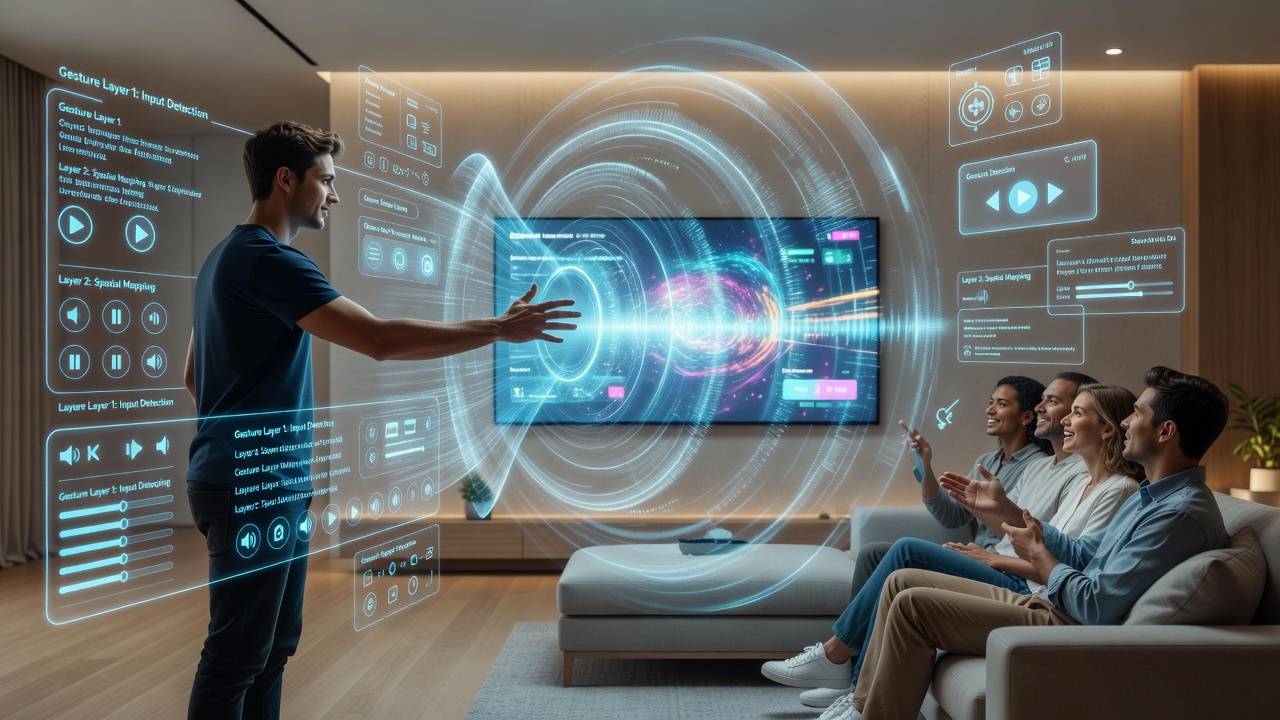
Gesture recognition layers once tied mainly to mobile screens now appear in shared living room entertainment hubs where multiple people gather around large displays, and this shift brings measurable changes to how groups coordinate actions, take turns, and communicate during sessions. Data from industry reports indicate that adoption rates for these systems in multi-user home environments rose steadily through 2025, with projections showing continued growth into August 2026 as hardware costs drop and integration with existing smart TVs becomes standard. Researchers at several academic institutions tracked installation figures across North American and European households, noting that voice and touch controls alone no longer satisfy demand for hands-free group participation.
Technical Foundations Behind the Expansion
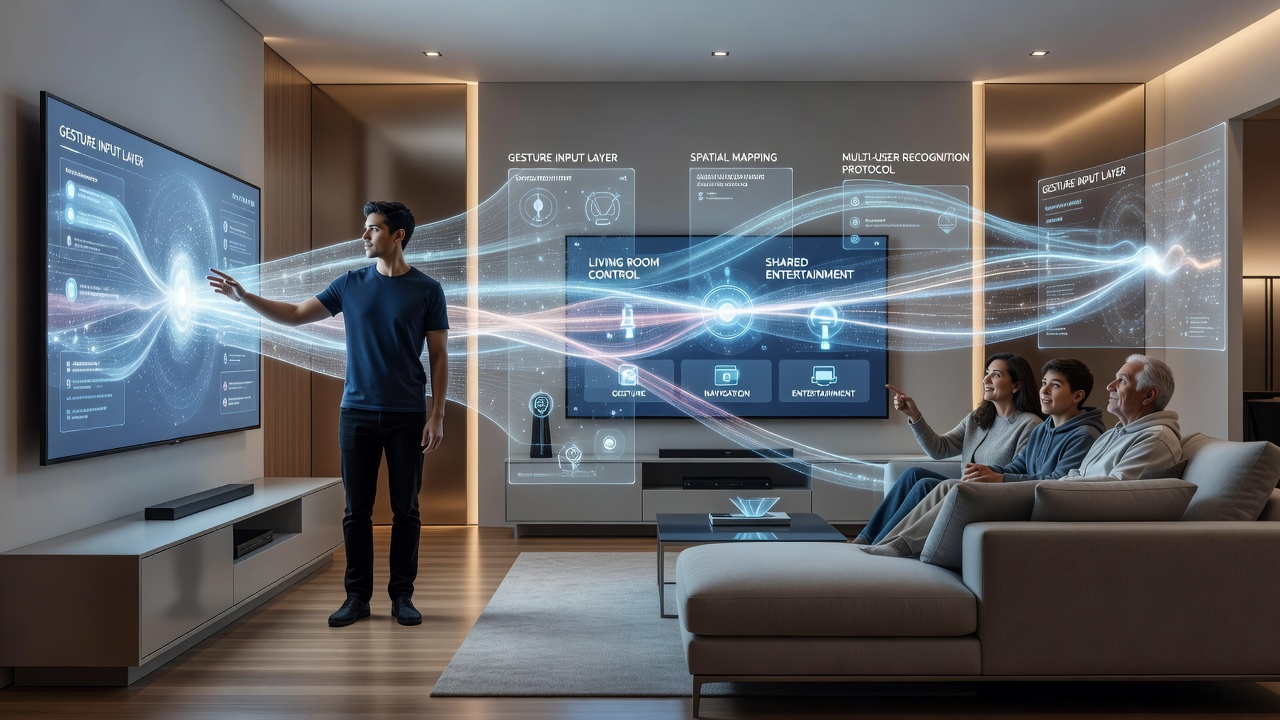
Modern gesture recognition relies on depth-sensing cameras, infrared arrays, and machine learning models trained on diverse body movements, and these components now sit inside or attach to entertainment hubs rather than remaining locked inside individual phones. Manufacturers embed the sensors directly into soundbars or set-top boxes, which allows a single device to capture inputs from several people at once while filtering background motion. According to figures released by the European Telecommunications Standards Institute, compatibility testing across 2025 models confirmed that latency in group scenarios stayed below 50 milliseconds in controlled tests, a threshold that supports real-time responses during collaborative play. Observers note that calibration routines have simplified to the point where users complete setup in under two minutes, removing a previous barrier to wider household use.
Patterns of Group Interaction in Shared Spaces
Studies conducted in controlled home environments reveal that participants divide attention differently when gesture layers replace individual controllers, because everyone can see and respond to the same visual cues on the main screen. One project at a Canadian university followed 120 households over six months and recorded that average session length increased by 18 percent when gesture options were active, while verbal coordination among group members rose in frequency. Those who studied the data point out that turn-taking becomes more fluid since no one needs to pass a physical device, yet interruptions also occur more often when multiple people attempt simultaneous gestures. In Australia, media research centers documented similar trends during family viewing events, where gesture commands allowed quick adjustments to volume or playback without requiring a single person to hold the remote.
Hardware and Software Developments Through Mid-2026
By August 2026 several major platforms had released firmware updates that added multi-user gesture profiles, enabling the system to distinguish between up to four distinct hand movements at the same time. These updates incorporated privacy filters that mask non-participant motion and store only session metadata rather than raw video, a step that aligns with guidelines from regulatory bodies in multiple regions. Industry associations such as the Entertainment Software Association published compatibility benchmarks showing that gesture-enabled hubs maintained consistent frame rates when connected to both 4K and 8K displays. Meanwhile, integration with existing mesh networks reduced dropped inputs during peak household usage hours, according to tests shared by research groups in the United Kingdom.
Observed Effects on Communication and Participation
Longer observation periods indicate that groups using gesture layers tend to develop shorthand movements that replace spoken instructions, which shortens response times but can exclude newcomers unfamiliar with the gestures. Data collected across repeated trials show that children and older adults participate at higher rates once physical controllers are removed, because the barrier of learning button layouts disappears. Yet researchers also recorded instances where dominant participants performed most gestures, leaving others to observe rather than engage directly. Figures from longitudinal studies suggest that explicit group rules or on-screen prompts help balance participation, and several platforms now include optional tutorial overlays that appear when the system detects uneven input distribution.
Future Integration Points and Measurement Metrics
Analysts expect further expansion as gesture recognition merges with spatial audio and lighting controls, allowing a single hub to manage both entertainment and ambient environment adjustments through coordinated movements. Metrics tracked by academic consortia include gesture accuracy rates, participant satisfaction scores, and changes in conversation density before and after system introduction. Reports compiled through 2026 highlight that accuracy improves when rooms maintain consistent lighting, while cluttered spaces increase false positives by roughly 12 percent. These measurements guide ongoing refinements in sensor placement and algorithm training, ensuring the technology adapts to varied living room layouts without requiring structural changes.
Conclusion
Gesture recognition layers continue their migration from mobile devices into shared living room entertainment hubs, and available data document clear shifts in how groups coordinate, communicate, and divide participation during collective sessions. Continued monitoring through standardized metrics will clarify long-term patterns as hardware and software updates accumulate through the remainder of 2026 and beyond.