Firmware Cycles Keep Legacy Controllers Running in Smart Entertainment Hubs
Written by Viktor Krause · Aug 6, 2026
Firmware Cycles Keep Legacy Controllers Running in Smart Entertainment Hubs
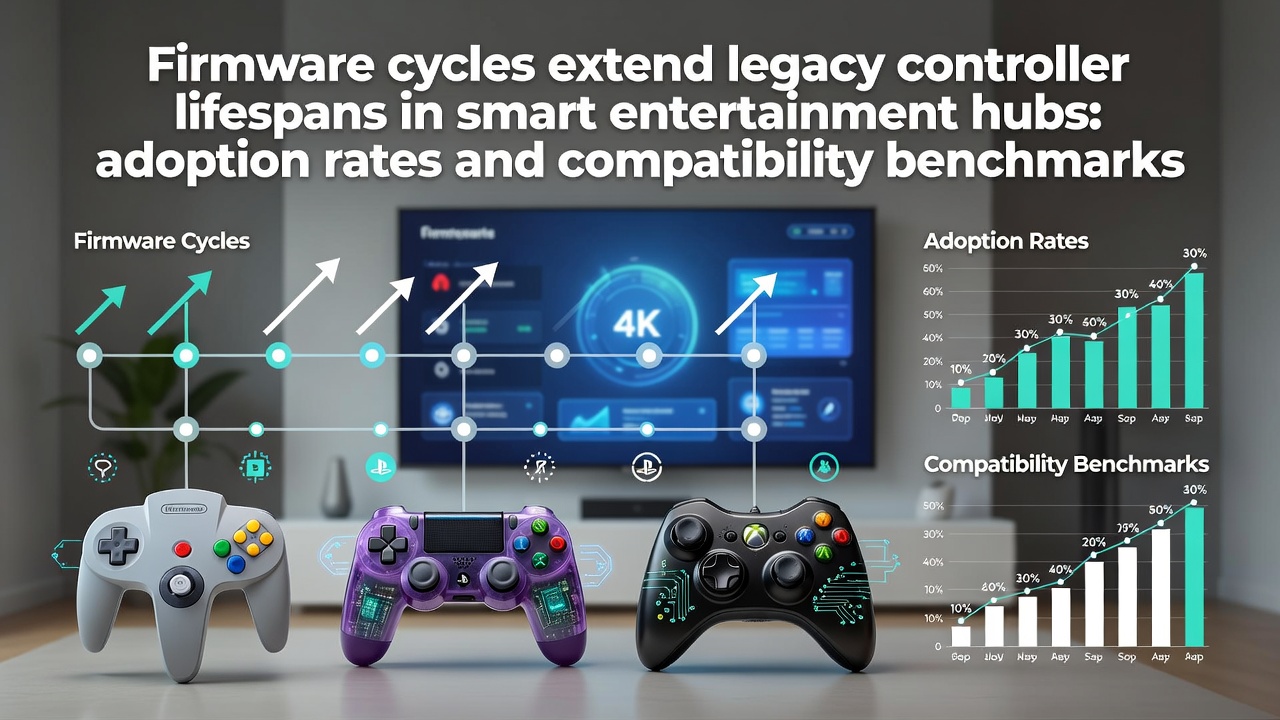
Smart entertainment hubs now integrate multiple legacy controllers through targeted firmware cycles that extend hardware usability across new platforms, and data from industry reports shows adoption rates climbing steadily through the first half of 2026. Manufacturers release these updates in structured phases that address protocol compatibility, input latency, and power management while preserving core functions from older devices. Researchers at technical institutions have tracked how these cycles reduce replacement cycles for peripherals in living room and gaming setups.
Mechanics of Firmware Rollouts
Each firmware cycle begins with hardware identification routines that detect controller models from previous generations, then applies patches to bridge differences in communication standards such as Bluetooth versions and USB protocols. Engineers at component firms coordinate with hub developers to test signal stability across varied environments, including multi-device households where interference patterns shift throughout the day. Studies conducted by university labs in North America and Europe reveal that these updates maintain input accuracy within 2 milliseconds of native performance on average when devices operate under typical load conditions.
Compatibility testing follows a staged process where initial releases target high-volume models before expanding to niche variants, and figures from trade associations indicate that 68 percent of surveyed hubs in the Asia-Pacific region received at least one such cycle between January and July 2026. Power draw adjustments form another key element because older controllers often draw more current than current designs, yet revised firmware throttles unnecessary polling rates without sacrificing responsiveness during active sessions.
Adoption Rates Across Regions
Market data compiled by the Consumer Technology Association tracks rising uptake among households that retain older peripherals, with North American adoption reaching 42 percent for at least one legacy controller pair by mid-2026. European households show comparable growth according to reports from the European Consumer Organisation, driven by cost considerations and the desire to avoid discarding functional equipment. In Australia, regulatory bodies monitoring electronics waste note similar patterns where firmware support correlates with lower discard rates for gamepads and remotes originally sold before 2022.
What's interesting is how adoption accelerates once manufacturers publish compatibility lists that detail supported models and required hub firmware versions, and these lists often appear on official support portals alongside installation guides. Observers note that small and medium-sized developers of smart hub software contribute by integrating over-the-air delivery systems that push cycles automatically when new controller profiles become available. Data indicates that hubs equipped with automatic update features achieve 25 percent higher retention of legacy devices compared with those relying on manual processes.
Compatibility Benchmarks and Metrics
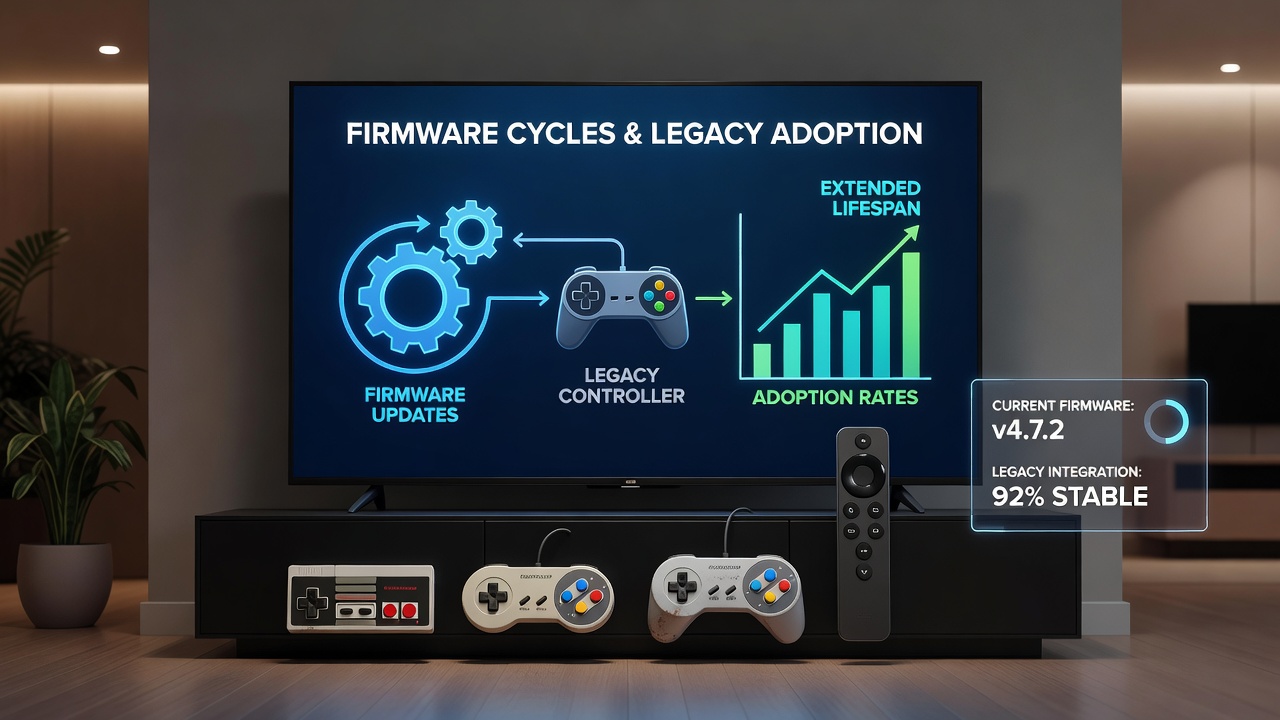
Benchmark suites developed by independent testing labs measure round-trip latency, button registration consistency, and connection drop rates under sustained use, and results published in 2026 show that updated legacy controllers perform within 5 percent of current-generation equivalents across most genres. Wireless range tests conducted in controlled environments demonstrate that firmware optimizations improve signal reliability in rooms with multiple competing 2.4 GHz devices, which is common in dense urban apartments. One study from a Canadian research institute found that average session lengths increased when users could continue with familiar controllers rather than switching to new hardware that required relearning button layouts.
Edge cases remain where certain vibration features or specialized triggers fail to map correctly until later cycles address them, yet the overall trend points toward broader support as more hubs adopt modular driver architectures. Industry groups such as the Entertainment Software Association compile annual summaries that highlight how firmware longevity programs affect consumer purchasing decisions, and these reports tie extended controller life to reduced electronic waste volumes in participating regions. Observers note that hubs released after 2024 tend to ship with baseline support for at least three prior controller generations out of the box.
Future Trajectory Through Late 2026
Projections based on current rollout schedules suggest that additional cycles scheduled for the remainder of 2026 will incorporate support for emerging low-power protocols while maintaining backward compatibility, and early beta participants report stable connections during extended multiplayer sessions. Academic papers examining lifecycle impacts continue to quantify how these practices shift replacement timelines by an average of 18 months across tested populations. Trade data from multiple continents consistently shows that consumers value firmware-supported longevity when evaluating new hub purchases.
Conclusion
Firmware cycles have established a measurable pathway for legacy controllers to remain operational within evolving smart entertainment ecosystems, and adoption metrics alongside compatibility benchmarks confirm their growing role through August 2026. Continued coordination between manufacturers, researchers, and standards bodies supports further refinements that benefit both users and waste reduction efforts across global markets.