Coordinating Ambient Lighting with Real-Time Esports Events in Live Television Streams
Written by Yves Otto · Jul 26, 2026
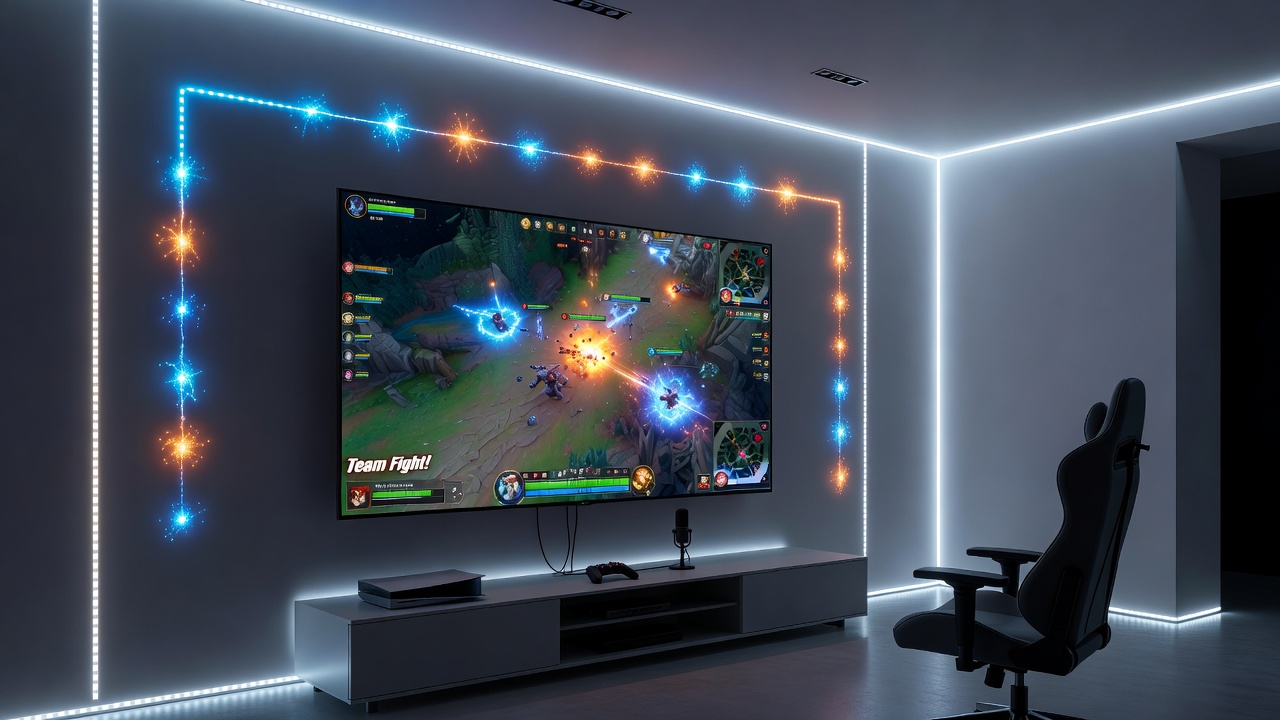
Coordinating Ambient Lighting with Real-Time Esports Events in Live Television Streams
Smart lighting systems now connect directly to game data feeds during extended competitive matches broadcast on television, creating synchronized patterns that shift in response to on-screen actions such as player eliminations, objective captures, and environmental changes. These integrations rely on APIs provided by game developers alongside lighting platforms that interpret real-time telemetry to adjust color, intensity, and timing across multiple fixtures in a viewing space. Data from industry reports shows adoption rates climbing steadily through 2025 into July 2026 as broadcasters seek ways to maintain audience engagement during long tournament sessions that can exceed four hours.
Core Synchronization Mechanisms
Lighting controllers receive structured event data through middleware layers that translate in-game triggers into commands for LED strips, bulbs, and panels positioned around the television. For instance a sudden health depletion in a first-person shooter might trigger a brief red pulse across peripheral lights while a successful team fight in a multiplayer online battle arena could shift the entire room toward a dominant team color for several seconds. Observers note that these patterns often follow predefined profiles developed by lighting manufacturers in collaboration with esports organizers, ensuring consistency across different broadcast regions and device ecosystems.
Researchers at institutions in Germany and Japan have documented how latency between the game server event and visible light change averages under 150 milliseconds when using wired network connections, though wireless setups introduce additional variability depending on router placement and interference levels. The patterns themselves tend to incorporate both reactive elements tied to immediate events and anticipatory sequences that build during downtime between rounds or maps, helping sustain visual interest without overwhelming viewers.
Common Patterns in Major Titles
Competitive titles such as those featured in major league circuits demonstrate distinct lighting signatures calibrated to their core mechanics. In titles centered on objective-based play, lights frequently cycle through neutral tones during setup phases then accelerate into rapid color transitions when control points change hands. Fighting game streams often use sharp, directional flashes to mirror character special moves while maintaining a stable base illumination that supports extended viewing sessions. Data collected by trade associations indicates that synchronization density increases notably during playoff brackets where match length stretches beyond standard formats.
One case examined by analysts involved a North American tournament series where organizers deployed a unified lighting profile across multiple venues and home viewing setups simultaneously. The system adjusted for broadcast delays by incorporating a short buffering window that aligned light changes with the delayed video feed rather than the live game state. This approach reduced viewer confusion and allowed the patterns to feel integrated rather than disconnected from the action on screen.
Technical Requirements for Reliable Performance
Successful synchronization depends on stable data pipelines that combine game telemetry APIs with local network protocols such as Zigbee, Z-Wave, or Wi-Fi based lighting ecosystems. Viewers typically install companion applications that listen for event streams either directly from the game client or through third-party overlay services used by broadcasters. Hardware compatibility lists published by major lighting companies detail which fixtures support the necessary refresh rates and color gamut ranges required for competitive titles featuring fast visual effects.
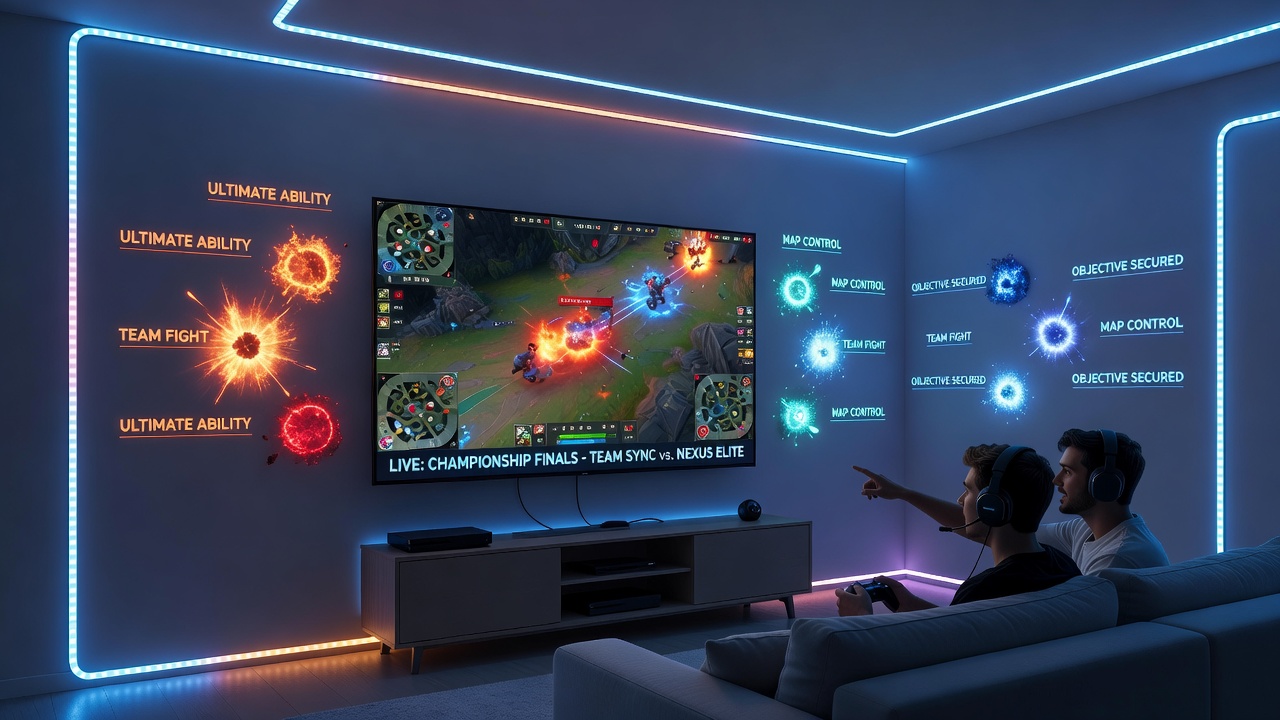
Network configuration plays a central role because packet loss during extended streams can cause desynchronization that leaves lights stuck in a previous state until the next event arrives. Experts recommend dedicated network segments for streaming devices and lighting controllers to minimize interference, particularly in households where multiple users access high-bandwidth services simultaneously. Studies conducted through academic partnerships in Canada and Australia reveal measurable differences in pattern fidelity when comparing standard consumer routers against those optimized for low-latency gaming traffic.
Viewer Impact and Implementation Trends
Surveys conducted by regional gaming federations show that synchronized lighting correlates with longer average watch times during multi-hour broadcasts, though results vary by individual preference and room setup. Some viewers report reduced eye strain when ambient lighting complements the television image rather than leaving surrounding areas dark, while others prefer minimal intervention during critical moments. Broadcasters have begun offering optional lighting profiles that viewers can toggle or customize through mobile interfaces, allowing personalization without affecting the core broadcast feed.
By July 2026 several major platforms had expanded their developer toolkits to include standardized event schemas that simplify integration for lighting partners. This standardization reduces the need for custom scripting per title and supports cross-game profiles that apply consistent behavioral rules across different competitive scenes. Implementation remains most common in fixed viewing environments such as dedicated media rooms where multiple fixtures can be positioned strategically around the primary display.
Conclusion
Smart lighting synchronization with in-game events continues to evolve alongside improvements in game telemetry availability and network infrastructure. The patterns observed during extended competitive streams reflect a combination of technical capabilities, event-driven design choices, and viewer feedback gathered across different regions and platforms. As more tournaments adopt these systems, the range of supported titles and customization options is expected to expand further while maintaining focus on reliable, low-latency performance that aligns lighting changes with the broadcast feed.