Charting Compatibility Challenges When Pairing Legacy Peripherals with Updated Smart TV Ecosystems
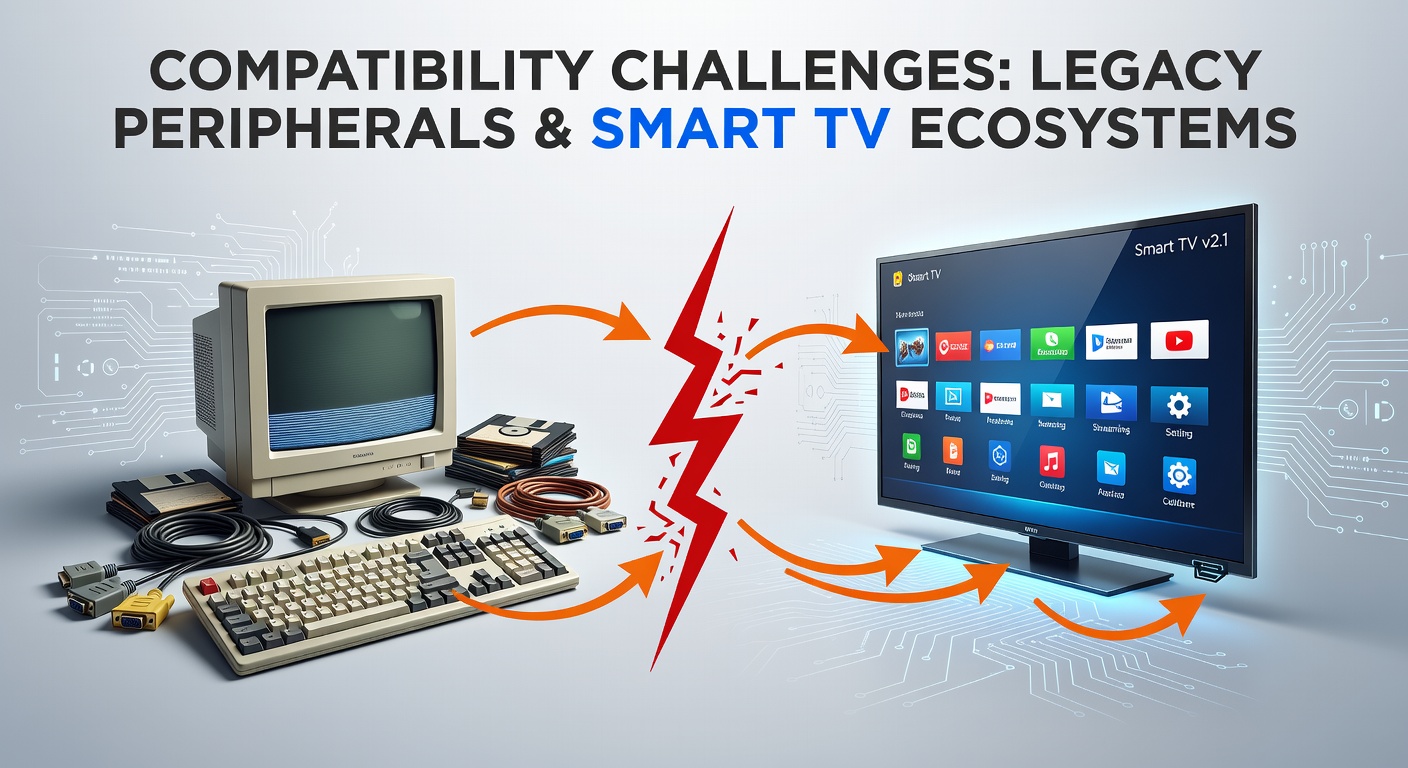
Smart TV platforms have advanced rapidly through successive firmware releases that prioritize security protocols and streamlined user interfaces, yet these updates often create friction for older peripherals that rely on earlier connection standards. Manufacturers continue to phase out support for legacy USB and Bluetooth implementations while consumers attempt to integrate devices purchased years earlier. Data from industry tracking shows that USB 2.0 controllers and pre-4.0 Bluetooth accessories represent a significant portion of compatibility reports submitted to support centers in early 2026.
Hardware Interface Shifts Across Major Platforms
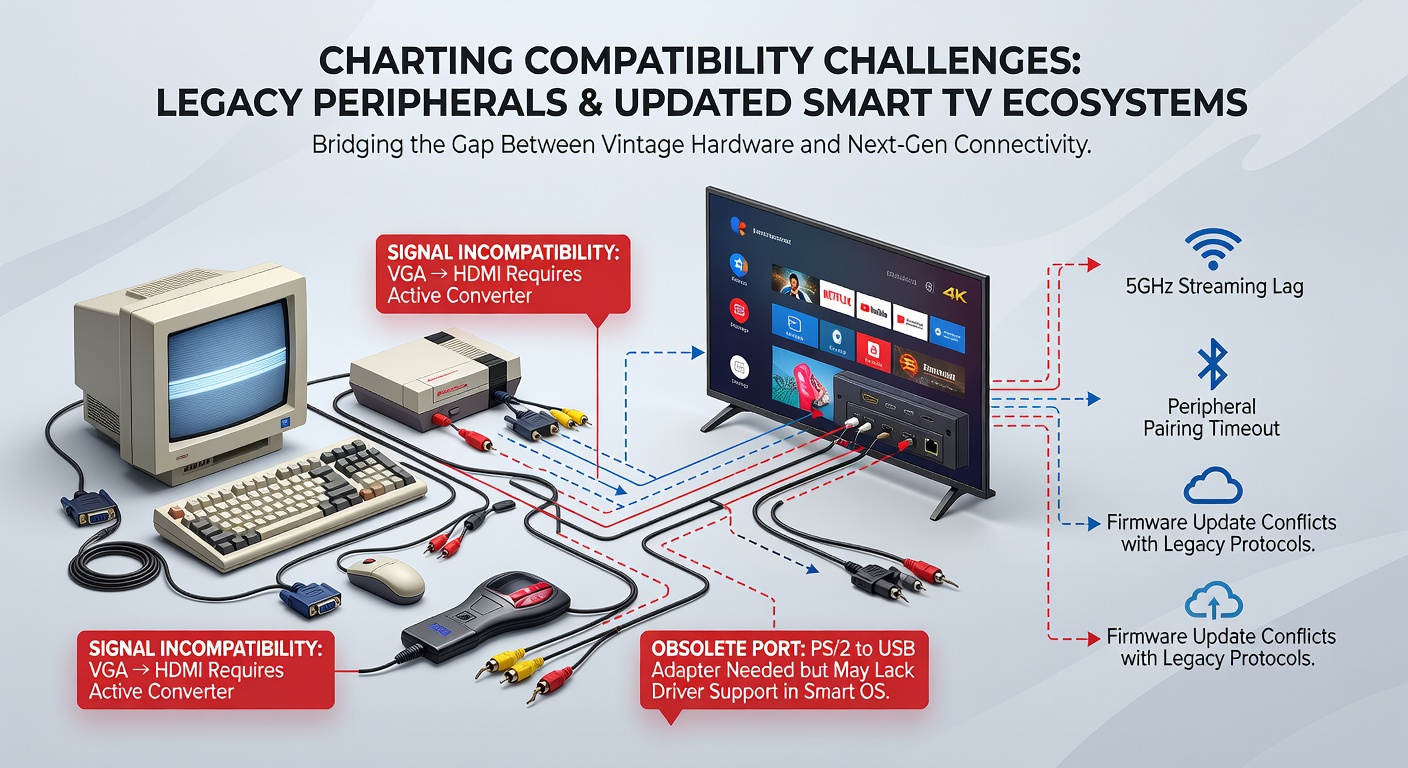
Updated smart TV operating systems such as Google TV, webOS, and Tizen enforce stricter USB power management and descriptor requirements that older gamepads and keyboards fail to meet. Devices built around USB HID class 1.1 specifications encounter enumeration failures when plugged into ports governed by newer kernel modules introduced after 2024. Observers note that HDMI-CEC handshakes also disrupt certain legacy infrared receivers that once worked reliably on 2018-era panels.
Bluetooth stack revisions compound the issue. Many current televisions ship with Bluetooth 5.2 or 5.3 radios that drop support for legacy pairing modes used by controllers from the mid-2010s. When users attempt connections during setup routines rolled out in June 2026 firmware updates, authentication packets time out because the TV firmware no longer accepts older link key exchange methods. Researchers at technical institutions have documented these failures across multiple brands in controlled tests.
Software Restrictions and Driver Gaps
Platform security policies now require signed drivers or verified app-level support before peripherals receive input privileges. Legacy devices lacking corresponding certification entries in the TV's app store ecosystem simply remain invisible to the system. This approach stems from broader industry efforts to reduce attack surfaces, yet it leaves users without native pathways for older hardware.
Third-party adapter solutions sometimes bridge the gap, though success rates vary by chipset. Certain USB-to-Bluetooth converters allow older wired controllers to appear as modern HID devices, yet these adapters introduce additional latency that affects real-time input scenarios. Reports compiled by consumer electronics associations indicate that adapter reliability improves when the converter itself supports USB 3.0 signaling and recent Bluetooth profiles.
Regional Standards and Testing Findings
European regulatory documentation on radio equipment compatibility highlights that legacy Bluetooth devices operating outside current spectrum management guidelines face increasing rejection rates on updated consumer electronics. Similar patterns appear in data released by Australian communications authorities, where testing of imported smart TVs revealed systematic drops in support for pre-2019 peripherals.
One study conducted at a North American research university examined 150 legacy controllers paired with 2025 and 2026 television models. Results showed that only 34 percent achieved stable connections without external intervention, while the remainder required firmware downgrades or specialized hubs. These figures align with support ticket trends reported by major manufacturers during the first half of 2026.
Workarounds Observed in Practice
Users frequently turn to external streaming devices or dedicated capture hardware to bypass built-in TV Bluetooth stacks. These intermediate devices run their own operating systems that retain broader legacy support. In several documented cases, connecting a legacy controller through an older Android TV box and then casting the output to the main television restored functionality without requiring new hardware purchases.
Network-based input solutions also gain traction. Applications that translate controller signals over local Wi-Fi allow older devices to communicate indirectly with the television through a secondary computer or mobile phone acting as a bridge. Such methods avoid direct pairing conflicts but add steps to initial setup procedures.
Conclusion
Compatibility challenges between legacy peripherals and updated smart TV ecosystems arise from deliberate platform evolution toward enhanced security and performance. Hardware standards, driver requirements, and protocol revisions collectively reduce backward compatibility. Data collected across multiple regions in 2026 confirms these patterns persist despite available workarounds. Continued documentation from standards organizations and academic testing provides the clearest picture of which combinations remain viable and which require alternative routing.